Walk into any commercial facility and look up. Light fixtures, beams, ceiling fans, ventilation grilles, and ductwork that is not covered.
That’s where dust goes when you only clean what’s at eye level. After a few months, that buildup becomes more than just a problem with appearance. It makes the air worse, sets off compliance flags, and raises health and safety concerns that most people don’t notice until an inspection does.
High dusting covers surfaces above 10 feet; the kind of standard cleaning crews don’t reach, and most maintenance schedules quietly skip. It requires specialized equipment, trained technicians, and OSHA-compliant safety protocols. Not every crew is set up for it.
Where Dust Accumulates in Commercial Spaces
Dust collects the fastest on surfaces that don’t get cleaned often:
- Fans and lights on the ceiling
- Beams and ductwork that are out in the open
- Grilles and ventilation ducts
- Fire suppression equipment and sprinkler heads
- Shelves and storage racks that are high up
- Machines and sensitive equipment that are above ground
This buildup happens faster in warehouses, industrial cleaning areas, and commercial spaces with high ceilings because air is always moving, people are walking around, and machines are running. Accumulation speeds up without frequent cleaning and surface cleaning at height.
Why It Matters for Compliance
OSHA requires employers to keep workplaces free of known hazards. On high surfaces, dust buildup qualifies. It’s combustible in facilities handling flammable materials, and it circulates back into the breathing zone through ventilation systems in any facility.
Key compliance issues are:
- Occupational safety standards: Too much dust can break OSHA rules about workplace safety and put workers at risk.
- Air quality requirements: Dust from high surfaces gets back into the breathing zone through HVAC circulation, which makes the air inside less clean.
- Safety rules that are specific to each industry: For example, healthcare facilities, food production facilities, and warehouses all have their own rules about cleanliness and safety.
- General liability: Businesses that are open to employees and customers must keep the air quality safe.
A failed inspection doesn’t stop at the fine. The fine is the easy part. The disruption and the paper trail take longer to clear.
The Air Quality Connection
Most facilities service their HVAC filters regularly. What they miss is everything above the filter line. Ceiling-mounted lights, structural beams, and ventilation grilles collect dust that standard cleaning schedules rarely include.
This buildup over time:
- Overwhelms systems for filtering
- Moves around things that can cause allergies, like dust mites, mold spores, and small particles.
- Makes more people complain and take sick days
- Reduces productivity across the work environment
There isn’t always one clear reason for poor air quality. But dust and allergens from hard-to-reach areas are always a big part of the problem.
Scheduled high dusting helps prevent buildup before it circulates back through the ventilation system and into the occupied space. It can also help prevent long-term strain on HVAC equipment caused by excessive particulate circulation.
This isn’t a cosmetic service. It’s a core part of cleaning operations that directly affects air quality and the safety of everyone in the building.
Equipment and Safety Protocols
Regular high dusting introduces working-at-height risks. So, safety procedures matter.
Some common tools and methods are:
- High dusting pole systems: work best for moderate heights and light dust buildup.
- Microfiber cleaning attachments: Don’t move dust around; they catch it.
- HEPA-filtered vacuums: Get rid of small particles in areas where sensitive equipment is stored.
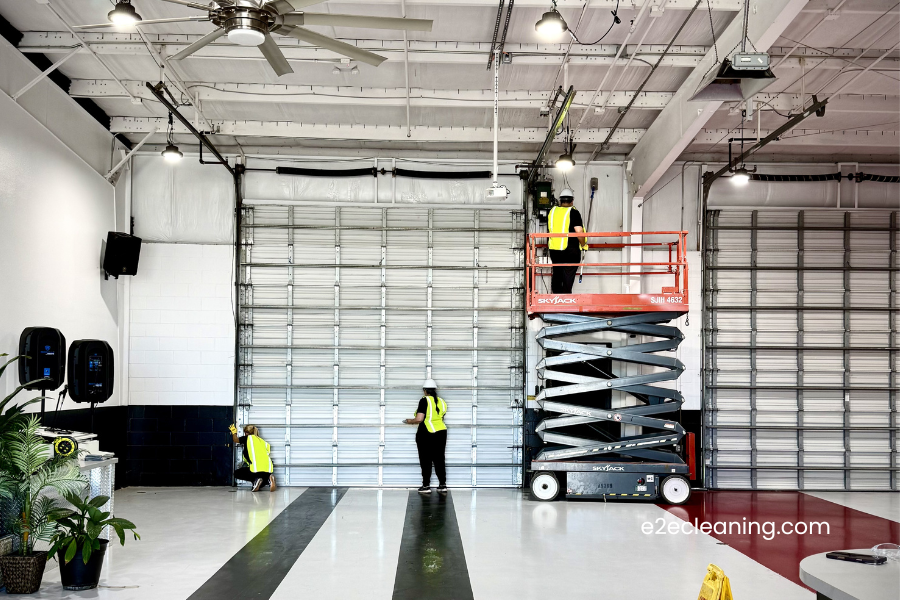
- Aerial lifts: are needed in places with high ceilings where pole systems can’t safely and effectively reach.
- Cleaning products made for cleaning elevated surfaces: These are special solutions that trap particles without leaving a residue on fixtures or machines.
Any work performed at height requires proper personal protective equipment. Eye protection, respiratory gear, and fall arrest systems when lifts or scaffolding are involved. OSHA doesn’t treat these as optional.
Professional commercial cleaning services bring both the cleaning equipment and the training they need for safety and health. The risk of liability from untrained workers cleaning at heights is usually higher than the cost of hiring a qualified cleaner or cleaning service.
What to Look for in a High Dusting Provider
Not every cleaning service handles high dusting. Before hiring, verify:
- Written safety protocols and procedures
- Proper insurance coverage for height work
- Experience with your facility type
- A defined cleaning process for each surface material
- Familiarity with the compliance standards that apply to your industry
The provider matters as much as the schedule. A crew without the right cleaning practices or equipment on high surfaces creates more risk than the dust they’re hired to remove.
Frequently Asked Questions About High Dusting
What is high and low dusting?
High dusting is cleaning surfaces that are higher than the average person’s reach, which is usually 10 feet or more. This includes ceiling fans, beams, light fixtures, and HVAC ductwork.
Low dusting gets rid of dust on everything on the floor and below, such as baseboards, lower shelves, and equipment that is mounted on the floor.
You need both to clean surfaces that are high and low well. Most commercial cleaning programs use both to keep dust from building up all over the building.
How to do high dusting in a commercial facility?
Before professional high dusting can begin, the site must be checked for ceiling height, types of fixtures, and possible dangers.
A trained cleaner then uses a high dusting system. Depending on the space, this could be pole systems, microfiber tools, or aerial lifts.
High dusting works top to bottom. Displaced dust and debris fall onto surfaces cleaned last, not ones already done. In a commercial setting, the equipment requirements and safety protocols make this a job for trained technicians, not standard cleaning crews.
Is high dusting required by OSHA?
OSHA doesn’t have a regulation labeled “high dusting.” What it does have is the General Duty Clause, which requires employers to keep workplaces free of recognized hazards.
Excessive dust accumulation on high surfaces falls under that standard, particularly in facilities where combustible dust is a concern. Industry-specific regulations may add additional requirements depending on your facility type.
Can my in-house janitorial team handle high dusting?
The height of the ceiling, the availability of equipment, and the training all play a role. High dusting pole systems may be able to reach surfaces that are less than 15 feet high.
Most of the time, anything higher needs aerial lifts, fall protection, and special safety training.
Most facility managers think that hiring a professional commercial cleaning service is safer and cheaper than hiring and training their own staff.
What areas are typically included in a high dusting service?
A normal high dusting program includes:
- Fans and lights on the ceiling
- Beams, pipes, and ductwork that are not covered
- HVAC parts and ventilation grilles
- Fire suppression systems and sprinkler heads
- High shelves and places to store things
- Signs and fixtures on the ceiling
- Sensitive equipment that is mounted high up
Your provider should change the scope based on an assessment of your specific commercial space.
Starting Out
If your facility hasn’t had professional high dusting in the last three months, the dust is already there. On the beams, the lights, the ventilation grilles, and all the flat surfaces above eye level.
A good commercial cleaning partner will look over your space, find the most important areas, and create a plan focused on maintaining a clean and safe facility that stays up to code.
Want to see what a planned high dusting program would look like for your building? Request a free cleaning quote, and we’ll start with a site visit that doesn’t cost you anything.