Why Florida’s Unique Environment Demands Specialized Surface Care
Florida’s subtropical climate presents a set of unique hurdles for commercial properties. The interplay of salt air, persistent humidity, and strong UV rays impacts every surface in its own way. A solution that works well in Arizona or Minnesota could be a recipe for failure in the Sunshine State.
Commercial property owners put a lot of money into high-quality finishes and fixtures. These surfaces warrant more than a generic cleaning strategy.fl
Material-specific cleaning recognizes that marble reacts differently than granite, that stainless steel needs different treatment than brass, and that what protects wood could harm stone.
The Hidden Cost of Generic Cleaning Methods
At first glance, generic cleaning methods seem like a smart way to save money, but they can quickly become a financial burden.
Using the wrong cleaner on natural stone, for instance, can leave permanent marks. Harsh chemicals on delicate fabrics? They only speed up the inevitable wear and tear.
These problems don’t always make themselves known right away, which makes them all the more dangerous.
The real costs become apparent over time:
- Premature replacement of expensive materials
- A diminished overall look can impact how clients see your business
- Increased maintenance frequency to address damage
- Potential liability from deteriorating surfaces
Precision cleaning, on the other hand, protects your initial investment and helps every surface in a commercial space last longer.
Understanding Florida’s Impact on Commercial Surfaces
Salt Air and Coastal Corrosion
Surfaces near the coast are exposed to aerosolized sodium chloride. This microscopic salt can seep into porous materials, which speeds up the oxidation of metals.
Even properties located far from the coast are affected by salty air, due to the way the wind blows. The salty air creates a corrosive environment, requiring special protective measures and cleaning methods.
Humidity’s Effect on Different Materials
Florida’s average humidity, a consistent 70–75%, means constant moisture. This consistent dampness is a perfect environment for mold to thrive, especially in shaded and poorly ventilated areas where daytime humidity levels are higher, particularly in the mornings and midday.
This humidity accelerates the oxidation of metals and leads to wood warping. Without proper maintenance, materials will expand and contract, finishes will break down, and surfaces will become ideal for biological growth.
UV Exposure and Surface Degradation
UV radiation in Florida is among the strongest in the United States.
This intense exposure causes finishes to fade, polymers to break down, and surfaces to chalk. Windows, skylights, and outdoor areas suffer accelerated aging that standard cleaning simply can’t fix.
Not sure how Florida’s climate is affecting your property surfaces? Request our complimentary surface assessment to identify vulnerable areas before damage occurs.
Natural Stone Surfaces: Keeping Elegance Intact in Busy Spaces
Marble Care: Avoiding Etching
Because marble is mostly made of calcium carbonate, it’s susceptible to acids. Even cleaners that claim to be “all-purpose” and pH-neutral can slowly harm the surface.
To properly care for marble, you need alkaline-based solutions designed to clean without causing a chemical reaction.
Professional marble maintenance involves:
- pH-tested cleaners that protect the calcite structure
- Microfiber application to avoid scratches
- Regular honing to fix micro-etching
- Penetrating sealers that let the stone breathe
Granite Care That Keeps the Shine
Granite, with its density and low porosity, is a bit easier to care for than marble, but it still needs some special handling.
Silicone-based sealers are great for preventing stains while keeping the stone’s natural shine. When cleaning, it’s important to avoid waxes that can build up and make the surface look cloudy.
Travertine: Managing Porosity and Polish
Travertine’s natural pitting creates its own set of cleaning challenges. The porous stone absorbs liquids quickly, making immediate spill response critical.
Special cleaning methods are used to get rid of dirt trapped in the stone’s natural holes without harming the polished or honed finishes.
Glass and Mirror Surfaces in Humid Climates
Streak-Free Results, Even in Florida’s Humidity
Humidity plays havoc with standard glass cleaning methods, primarily by slowing down how quickly water evaporates.
This prolonged drying period gives minerals and leftover cleaning agents a chance to settle, resulting in those annoying streaks and a cloudy film.
Professionals in the field employ low-moisture techniques and carefully controlled drying processes to achieve that crystal-clear finish.
Battling Hard Water Stains
Florida’s groundwater is loaded with minerals such as calcium and magnesium, plus smaller amounts of sodium and iron due to the region´s limestone-rick geology.
These dissolved solids leave behind chalky deposits on glass.
Getting rid of stubborn hard water stains demands the use of chelating agents, which break down the mineral bonds without damaging the glass itself.
Specialized Coatings for Lasting Clarity
Hydrophobic coatings offer a protective shield that repels water and stops minerals from sticking.
These treatments mean less frequent cleaning and help keep the glass looking clear for a longer time than unprotected surfaces.
Wood Surfaces: Guarding Against Humidity’s Toll
Caring for Hardwood Floors in Humid Climates
Wood floors in Florida facilities face constant stress from humidity. Even though they are not a prominent choice for most commercial environments, as they struggle in high-moisture conditions.
Too much moisture leads to cupping and crowning, while too little creates unsightly gaps.
Cleaning routines must be designed to avoid saturating the wood, all while effectively removing dirt and preserving the finish.
Preserving Wood Paneling and Millwork
Decorative wood elements demand careful cleaning to protect the finish without introducing excess moisture.
Oil-based conditioners can help maintain the wood’s appearance and provide a subtle moisture barrier.
Preventing Warping and Expansion Problems
Wood’s dimensional stability hinges on its moisture content. Cleaning methods must not upset this balance.
Quick-drying techniques and products designed for the appropriate humidity levels can prevent the expansion and contraction cycles that cause structural damage.
Metal Fixtures and Surfaces
Stainless Steel: Keeping It Spotless
Stainless steel is a magnet for fingerprints and watermarks.
The key to keeping it looking good is cleaning it the right way: always follow the grain, and use cleaners designed to lift oils without leaving a trace.
A good protective coating can help keep it cleaner for longer.
Brass and Copper: Battling the Elements
Copper and brass don’t stand a chance against salt air. They tarnish quickly.
Regularly polishing with the right metal polish will keep tarnish at bay before it sets in.
Protective lacquers can help, but they need special care to avoid causing problems.
Aluminum: The Oxidation Battle
In Florida construction, aluminum is used in various structures, including window frames, curtain walls, railings, storefront systems, and cladding due to its lightweight, strong, and formable structure.
Aluminum develops a chalky oxidation layer over time.
To deal with this, you’ll need to do some deep cleaning with a mild acid, followed by a protective treatment to prevent oxidation from returning.
Upholstery and Fabric Care
Commercial-Grade Fabric Cleaning Techniques
Commercial fabrics vary widely in fiber composition and structure.
There is considerable diversity in the fiber composition and structural design of commercial fabrics.
The right cleaning method (hot water extraction, dry cleaning solvents, or low-moisture techniques) depends on proper fabric identification.
Using the wrong approach can cause shrinkage, color bleeding, or texture damage.
Mold and Mildew Prevention in Florida’s Climate
In humid climates, fabric surfaces are prone to fungal proliferation.
Antimicrobial treatments, coupled with appropriate drying procedures, mitigate colonization while preserving the integrity of the fibers.
Odor Elimination Without Damaging Fibers
Odor molecules can penetrate deeply into the fabric’s structure.
Enzymatic treatments decompose organic compounds at the molecular level, thereby eliminating odors rather than merely masking them with fragrances.
Specialty Flooring: Beyond the Basics
Terrazzo: Keeping It Pristine
Terrazzo, a blend of marble chips and cement or epoxy, demands careful upkeep.
Cleaning solutions must be pH-neutral to avoid damaging either element.
To bring back that signature shine, periodic repolishing is essential.
Polished Concrete: Preserving the Shine
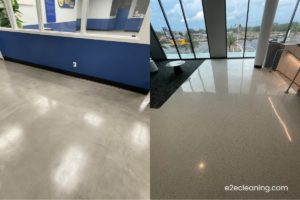
The gleam of polished concrete depends on the surface densifier remaining intact. Non-acidic cleaning products are essential to prevent surface etching.
Specialized burnishing helps maintain the gloss between major restorations, while regular pressure washing at appropriate PSI levels removes grease, mold, and food residue without damaging the densified surface.
Vinyl and LVT: Keeping It Shiny
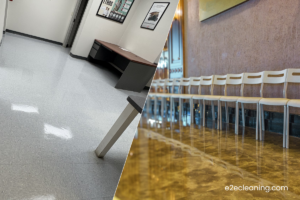
Luxury vinyl tile (LVT) and sheet vinyl come with wear layers designed to fend off scratches and stains.
But using cleaners with a high alkaline content can strip away these protective layers, making the surface prone to dullness and other forms of damage.
The key to good vinyl care? pH-neutral cleaners, methods that use less water, and soft-bristle tools that clean without scratching.
Grout Lines in LVT Installation
Grout lines are often part of LVT installations, especially when the goal is to replicate the look of natural stone.
These grouted seams, however, can be a problem in Florida’s humid climate:
- Mold and mildew can take hold in porous grout
- Staining from tracked-in dirt and spills
- Moisture penetration affecting the adhesive beneath
While grout used with luxury vinyl tile (LVT) is more flexible than its ceramic counterpart, it is still porous.
Consequently, maintenance necessitates the use of neutral pH cleaners, which safeguard both the grout and the vinyl. To prevent residue accumulation, targeted application along grout lines, gentle brush agitation, and thorough rinsing are essential.
Furthermore, Florida’s high humidity levels render moisture management crucial.
Water infiltration through grout lines can jeopardize adhesive bonds, potentially resulting in delamination.
Therefore, employing low-moisture cleaning methods and ensuring prompt drying are vital to circumventing these problems.
Technology and Equipment: Key Differentiators
Specialized Tools for Specific Materials
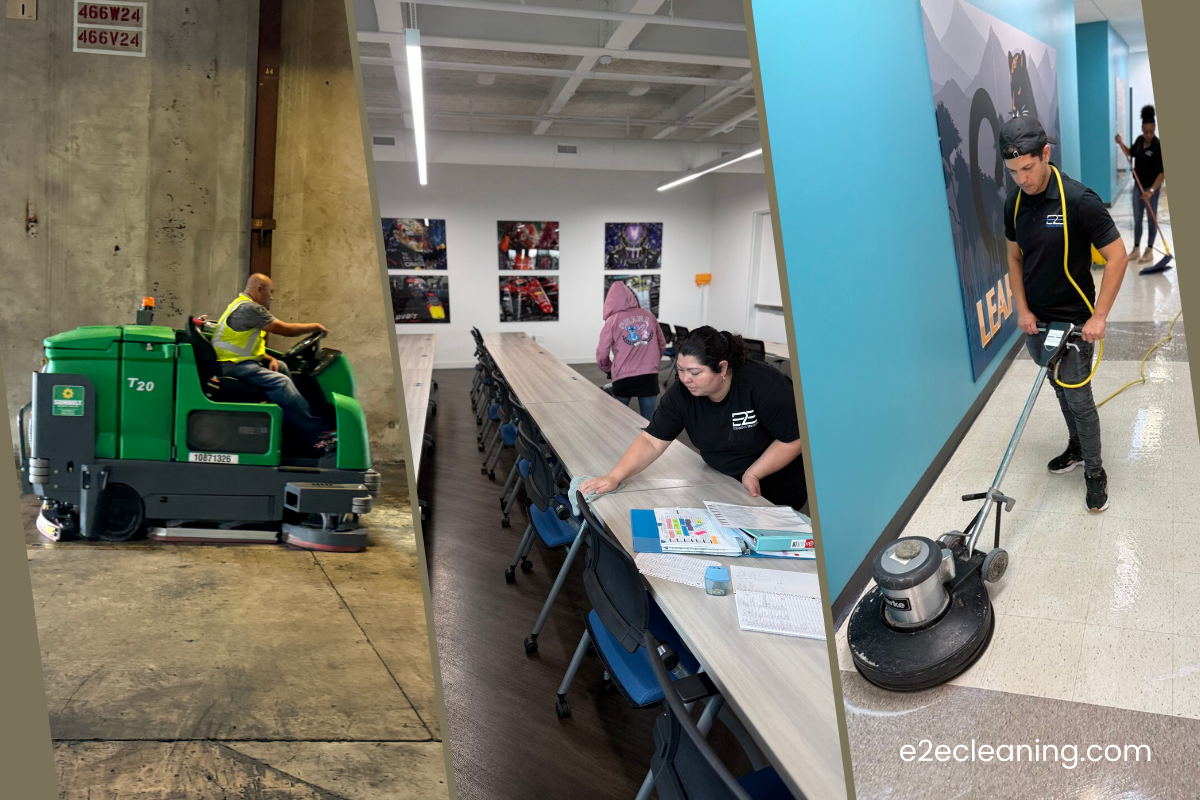
Professional surface care relies on equipment tailored to the job.
Microfiber bonnets for stone differ from those used on glass, and extraction tools are also material-specific.
This level of detail prevents cross-contamination and protects delicate surfaces.
pH-Balanced Products: A Matter of Compatibility
The pH of a chemical dictates its suitability for various materials.
Alkaline solutions are ideal for some surfaces, while acidic formulations are better for others. Neutral pH cleaners offer flexibility, though they might not always provide the necessary cleaning power for particular problems.
Advanced Techniques for Sensitive Surfaces
Delicate surfaces require a careful touch: low-pressure application, controlled moisture, and gentle agitation are all essential.
Professional methods strike a balance between effective cleaning and surface preservation.
The Science of Targeted Cleaning
Why Generic Methods Fall Short
Each material boasts its own chemical makeup, how porous it is, and the way it looks.
A cleaner that works wonders on granite could ruin marble. Knowing these differences is key to avoiding expensive errors.
Chemical Interactions and Material Responses
Surface damage frequently stems from chemical incompatibility. Acids can eat away at stones like marble and limestone.
Alkalines can tarnish some metals. Solvents might strip away protective layers.
Professionals are well-versed in these interactions.
Temperature and Timing: A Balancing Act
Heat can speed up cleaning, but it also raises the stakes. Contact time is critical; too little and the job’s not done, too much and you risk damage.
Protecting Your Investment Through Precision Care
Long-Term Cost Savings of Proper Maintenance
While cleaning costs vary by material, the initial investment pays off handsomely.
Surfaces endure longer, need replacing less often, and stay looking good with minimal upkeep.
Extending Surface Lifespan Through Expert Handling
Professional care dramatically increases the lifespan of commercial surfaces.
Marble floors, for instance, can last for decades. Metal fixtures retain their luster. Wood surfaces withstand the ravages of humidity.
Maintaining Property Value and Aesthetic Appeal
Well-cared-for surfaces help maintain property value and create a positive impression.
Clients notice quality finishes, and surfaces that are showing their age suggest a lack of attention that goes beyond mere looks.
Conclusion: Commitment to Perfection
Florida’s weather is unlike anywhere else, and that means your cleaning needs to be, too. Surfaces require tailored treatment to handle the humidity, the sun, and the effects of hard water.
This kind of attention to detail safeguards your investment, lengthens the life of your surfaces, and keeps your commercial property looking its best.
While specialized care might seem pricier at first, it ultimately saves you money over time. You’ll spend less on replacements, enjoy better looks, and maintain your property’s value.