Terrazzo is one of the most durable floors you can have in a commercial building. But durability without the right care program is how most facilities end up with a restoration problem nobody budgeted for.
The floor holds up. The maintenance routine is usually what doesn’t.
Most facilities in Florida are cleaning and polishing terrazzo the same way they treat everything else. Wrong mop, wrong product, wrong schedule. The floor starts looking flat and lifeless. Stains set in. Someone calls for a replacement quote before anyone’s actually looked at the surface up close.
That’s usually where our technicians come in.
What Terrazzo Actually Is
Terrazzo is a composite material. Marble chips, quartz, granite, or glass aggregate embedded in a cement or epoxy binder, then ground and polished to a smooth finish.
That composition gives terrazzo its aesthetic appeal and its durability. It also determines everything about how you clean and care for it.
There are two main types of terrazzo: cement-based and epoxy. Each responds differently to moisture, cleaning agents, and surface treatment. Not knowing which type you have means your floor care program may be working against the surface from day one.
Florida adds context worth noting. Moisture affects unsealed or poorly maintained terrazzo more aggressively here, particularly at the binder level where cracking and staining tend to compound.
A maintenance schedule built for a low-traffic lobby needs adjusting in high-traffic environments like schools or hospital entrances.
High-traffic and high-moisture environments need a maintenance cadence built for that reality.
Why Terrazzo Floors Lose Their Shine
It almost always comes down to one of three things:
- Wrong cleaning product. Terrazzo needs a stone-safe, terrazzo-safe solution. Acidic solutions, including vinegar, many standard floor cleaners, and anything with harsh chemicals, strip the finish and break down the binder over time. The floor looks clean after mopping. The damage compounds quietly.
- Wax buildup. Wax yellows and bonds to the aggregate, creating a layer that makes the floor looking flat and cloudy. Routine mopping doesn’t touch it.
- Skipped maintenance cycles. Terrazzo doesn’t need constant attention. It needs the right attention on a regular basis. When professional polishing gets pushed back quarter after quarter, the surface accumulates grime, micro-scratches, and discoloration that routine mopping won’t fix.
The Right Cleaning Process
Daily Care
Place floor mats at every entrance. They’re the first line of defense against the grit and debris that acts like sandpaper on the surface under foot traffic.
Dust mop daily to clear dirt and grime before it gets ground in. Follow with a damp mop and a terrazzo-safe cleaning solution. Rinse to prevent residue buildup. That’s the full daily picture.
What daily care doesn’t do: restore shine, remove embedded stains, or address chips and cracks. Those require a different process entirely.
Professional Restoration
The sequence matters, and a specialized technician follows it in order:
- Initial Assessment. Identify terrazzo type, existing damage, and finish condition before touching anything. A crack treated wrong becomes a bigger crack. A chip filled with the wrong material stands out permanently.
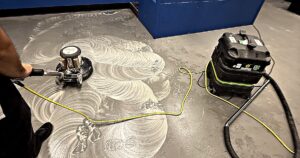
- Deep clean. Remove surface grime, old wax layers, and cleaning agent buildup using equipment designed specifically for terrazzo. Not a standard floor buffer. Not store-bought pads.
- Honing and polishing. Progressive diamond tooling refines the surface from coarse to fine, removing scratches and restoring clarity. This is what brings the shine back.
- Sealing. Apply a high-quality sealant suited to the terrazzo type. The protective coat fills the pores, resists future staining, and makes upkeep easier between professional visits. Without it, a freshly cleaned surface starts absorbing oil and dirt faster than most facility managers expect.
How Often Does Terrazzo Need Professional Care?
In most Florida commercial properties, once a year is the baseline to keep floors looking their best. High-traffic areas: entrances, corridors, and common spaces may need attention every 6 to 8 months.
Persistent cloudiness that mopping doesn’t fix, visible discoloration, and stains that won’t lift with your regular cleaning solution. Those are the signals that professional stain cleaning is overdue.
Facilities that end up with serious terrazzo damage usually aren’t working with a bad floor. They’re working with a care schedule that kept getting pushed back until the surface couldn’t recover on its own.
What You Should Never Use on Terrazzo
Keep these off your floors to preserve the surface and ensure long-term protection:
- Vinegar or any acidic cleaner
- Standard wax or topical sealers not rated for stone
- Regular floor buffers on aggregate surfaces
- Bleach or ammonia-based products
- Steam cleaning without professional guidance
If your current cleaning service is using any of these, it’s worth asking what protocol they follow for this surface type.
FAQs
What causes terrazzo floors to look dull?
Usually one of three things: the wrong cleaning product stripping the finish, wax buildup bonding to the aggregate, or a polishing cycle that got pushed back too long.
In Florida, moisture and high foot traffic make all three more visible, more quickly. The floor isn’t failing. It’s been maintained incorrectly.
Is vinegar or dish soap safe for terrazzo floors?
Both damage the surface, just differently. Vinegar is acidic and breaks down the finish over time. Dish soap leaves residue that attracts dirt and dulls the surface.
Terrazzo needs a stone-safe solution designed specifically for this floor type. Most standard products don’t qualify.
How do you remove stains from terrazzo floors?
It depends on how deep the stain has set. Surface stains respond to a terrazzo-safe cleaner and a soft mop. Embedded stains, oil, rust, or anything that’s had time to penetrate the pores needs a specialized technician with the right equipment and cleaning solution for that stain type.
Using the wrong product at that stage typically sets the stain further.
Does terrazzo need to be sealed after polishing?
Yes. A quality sealant after polishing protects the pores, resists future staining, and extends the time between professional visits.
Without a sealer, a freshly polished floor starts absorbing dirt and oil sooner than most facility managers expect. The sealer type matters too. It needs to match whether you have cement-based or epoxy terrazzo.
How long does terrazzo flooring last in a commercial building?
Properly maintained terrazzo can exceed 50 years in commercial settings.
The lifespan shortens without the right care program, but even neglected terrazzo is usually restorable before replacement enters the conversation.
What Terrazzo Actually Needs
Terrazzo is durable by design. What determines how long it keeps its aesthetic appeal is the cleaning process and care schedule behind it.
A terrazzo-safe solution, consistent daily upkeep, and professional polishing on schedule. That’s what keeps your floor looking its best and preserves its value long term.
If the surface is already worn, cloudy, or stained, professional restoration is almost always an option. Our team specializes in terrazzo floor cleaning services for commercial properties across Florida.
Get an assessment before the quote arrives. Schedule yours at e2ecleaning.com