Most warehouse cleaning plans exist somewhere. A laminated sheet near the break room. A shared doc nobody opens.
The problem isn’t the plan. It’s that the plan doesn’t fit how the building actually runs.
This one does. It maps to shift changes, high-traffic patterns, machinery zones, and compliance requirements. Built for facility managers and warehouse operators who need something they can actually use.
Cleaning Doesn’t Fall Behind. Scheduling Does.
Cleaning gets pushed when operations get busy. Tasks without clear ownership pile up. Grime builds in corners. Spills go unaddressed near forklift paths. High-traffic areas wear down faster than anyone planned for.
The fix isn’t more effort. It’s a cleaning schedule built around how the warehouse actually runs, assigned by zone and shift, with frequency that matches the workload.
That’s what protects both safety and efficiency when operations are running at full capacity. It keeps compliance on track and inspections manageable.
Daily Warehouse Cleaning Tasks
Daily tasks keep the work environment safe and functional. They’re the baseline that prevents bigger problems from building up between deep cleans.
Assign by zone and shift before anything else.
Warehouse Floor and Walkways
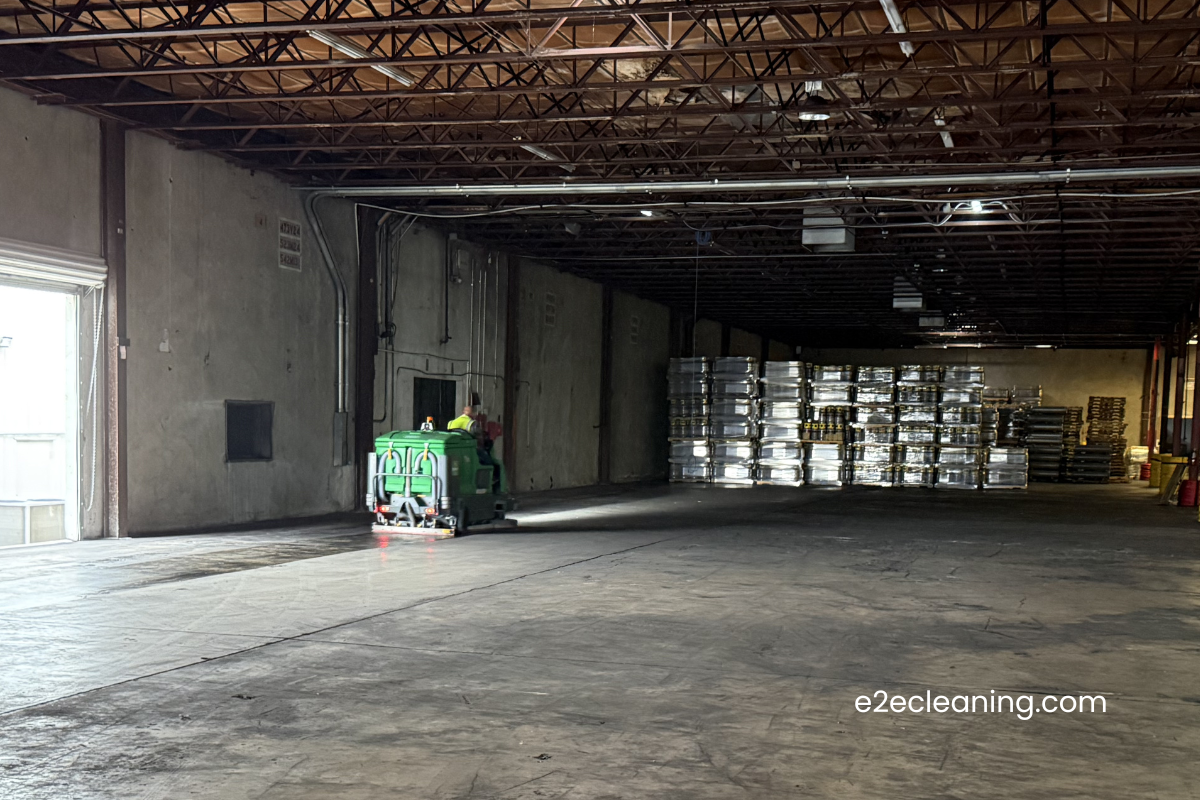
- Sweep or auto-scrub active warehouse floor areas
- Clear walkways of debris, packaging, and equipment
- Address spills immediately: mark, contain, clean
- Inspect forklift paths for obstructions
Common Areas and Entry Points
- Empty trash and recycling stations
- Wipe down break room surfaces and sanitize touchpoints
- Clean restrooms and restock supplies
- Remove dirt and debris from entry mats and doors
Safety Checks
- Confirm hazard signage is visible and in place
- Verify safety data sheets are current and accessible
- Log any maintenance issues that affect cleanliness or safety
Weekly Warehouse Cleaning Tasks
Weekly tasks target the buildup that daily sweeping misses. Schedule these during lower-traffic windows: shift changes or partial downtime.
Floors and Storage Zones
- Scrub warehouse floor sections with industrial-grade cleaner
- Clean under racking and shelving units
- Inspect floor drains and clear blockages
Machinery and Equipment Areas
- Wipe down machinery surfaces and control panels
- Clean around charging stations and equipment parking zones
- Check ventilation grilles for dust and grime accumulation
High-Traffic Areas
- Deep clean dock doors and receiving zones
- Sanitize shared equipment handles and buttons
- Inspect walkway markings for visibility and compliance
Monthly Warehouse Cleaning Tasks
Monthly tasks reach what regular cleaning alone doesn’t cover This is the deep cleaning layer: structural surfaces, floor restoration, and compliance documentation.
If your operation works with a professional cleaning service, monthly visits are the right time for these items.
Structural and Overhead
- Clean lighting fixtures and overhead storage areas
- Inspect and clean ventilation systems and ducts
- Wash walls and columns in active work zones
Floor and Surface Restoration
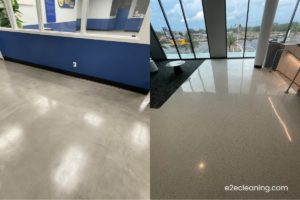
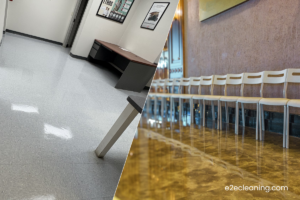
- Perform floor cleaning treatments based on surface type: sealed concrete, epoxy, or tile
- Strip and reapply floor finish where needed
- Document floor condition for audit records
Compliance and Documentation
- Review Occupational Safety and Health Administration requirements for your facility type
- Confirm cleaning and disinfecting logs are complete and accessible
- Update your warehouse cleaning schedule after any operational changes
When to Bring In a Commercial Cleaning Team
Some tasks fall outside what an internal team can handle efficiently. That’s normal for most well-run warehouse operations.
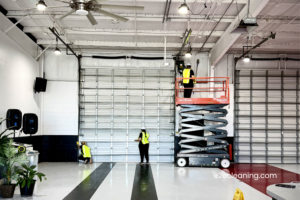
Professional warehouse cleaning services cover what routine cleaning schedules can’t: deep cleans, post-construction cleanup, High dusting and compliance-driven sanitization that requires commercial-grade equipment and documentation.
Internal teams handle the daily and weekly work. Outside teams handle what requires specialized tools, chemicals, or compliance records that go beyond standard cleaning practices.
That’s where a professional team earns its place. Explore E2E warehouse cleaning services
OSHA Compliance and Warehouse Cleaning Standards
OSHA sets baseline expectations for industrial environments. A clean warehouse isn’t just about appearance. It directly affects health and safety, liability exposure, and what an inspector finds when they walk through the door.
Key areas OSHA focuses on in warehouse environments:
- Clear and marked walkways free from obstruction
- Proper storage and labeling of chemicals with accessible safety data sheets
- Ventilation adequate for the materials and processes handled on-site
- Documented cleaning and maintenance records available for review
A consistent cleaning routine keeps the facility compliant and gives facility managers something concrete to show during an audit.
FAQs
How often should a warehouse be cleaned?
High-traffic zones need attention every shift. Full floor cleaning runs daily. Deeper tasks like racking, machinery, and ventilation follow weekly and monthly schedules. The right cadence depends on your volume, materials handled, and industry requirements.
What’s the difference between routine cleaning and industrial cleaning?
Routine cleaning covers daily and weekly maintenance: sweeping, sanitizing, trash removal. Industrial cleaning handles heavy buildup, specialized surfaces, and compliance-level work that requires commercial-grade equipment and chemical protocols beyond standard cleaning practices.
What are the most common OSHA housekeeping violations in warehouses?
Blocked emergency exits, unmarked spill areas, missing safety data sheets, and cluttered walkways near forklift paths. They show up consistently when cleaning tasks aren’t assigned or tracked. All of them are preventable with a structured cleaning schedule.
How do I get my team to actually follow a cleaning checklist?
Assign by zone and shift, not by person. Keep the checklist visible and short. Rotate responsibility so no one owns the same area indefinitely. The fewer steps between the task and the log entry, the more likely it gets done.
Do I need a professional cleaning service for warehouse compliance?
Not for everything. For documentation, specialized equipment, and scheduled deep cleans, a professional team reduces risk and frees up internal staff for operational priorities. Most well-run facilities use both.
The Checklist Is Only as Good as the System Behind It
A warehouse cleaning checklist doesn’t run itself. What makes it work is assigning tasks by zone and shift, keeping the schedule visible, and building the weekly and monthly layers once the daily routine holds.
Warehouses that stay compliant don’t get there through occasional deep cleans. They get there through a cleaning routine that fits how the operation actually runs, shift by shift, zone by zone.
That directly supports operational efficiency. Fewer delays, fewer incidents, less time lost to reactive fixes.
Start with the daily tasks. The rest follows.