Event Cleaning Services: The Planning That Starts 72 Hours Early
6 AM on Monday. A venue manager in Tampa walks through the building after hosting 50,000+ people the night before. No trash on the floor. Not sticky floors. No restroom disasters waiting to be found.
It’s not luck. It’s the result of a planning that started earlier.
Most people don’t know this, but those 50,000 guests made about 12 to 15 tons of trash, used the bathroom more than 75,000 times, and caused thousands of spills and other problems that needed to be fixed right away.
Industry Secret: Every 8-hour event runs on a 24-hour operational cycle from start to final cleanup.
If you run a venue, plan an event, or are in charge of operations in Tampa or anywhere else in Florida, this week is a great time to remember that scale changes everything.
Let’s take a look at how Tampa’s best venues deal with crowds this big without any of the problems that make the news.
What 50,000+ Really Means: The Numbers Don’t Lie
Let’s talk about reality before we get into strategy. These are the numbers that matter when you’re planning big events:
For every 50,000 guests, you should expect:
- More than 75,000 trips to the bathroom (yes, some people go more than once)
- A single event can produce 12 to 15 tons of trash.
- More than 3,000 spills and incidents requering immediate response
- More than 200 runs to restock supplies during the event
- 24-hour operational window from setup to final inspection
The breakdown by hour is as follows:
- Setting up before the event: 4–6 hours
- Active event operations last from 6 to 8 hours
- Deep clean after the event: 8 to 10 hours
- 2–4 hours for final inspection and prep
This isn’t about counting trash cans. Scale changes everything. What works for smaller events completely breaks down at 50.000+ attendees. Overlook one thing during planning, and you’re firefighting problems in front of a packed venue.
Pre-Event Planning: The 72-Hour Preparation Protocol
When guests arrive, professional venues don’t start cleaning. They begin three days before.
Zone Mapping: Breaking Up to Win
The first thing you need to do is divide your venue into operational zones. Most of Tampa’s big venues use a color-coded system:
Red Zones (Most important):
- Main groups of restrooms
- Main areas for food service
- Main hallways for entering and leaving
- Routes that are easy to get to for people with disabilities
Yellow Zones (lots of traffic):
- Sidewalks for walking
- Areas for concessions
- Seating areas
- Areas for merchandise
Green Zones (Standard rotation):
- Areas for administration
- Corridors in the back of the house
- Access points for storage
Why is this important? You can’t clean everything at once when 50,000 people are moving through your space. You need to know where problems will happen first and put your resources in the right places.
The Game of Staging
Most facility managers learn this the hard way: you can’t go back to the supply closet every time you need something. Supplies need to be placed in strategic locations throughout the venue at this scale.
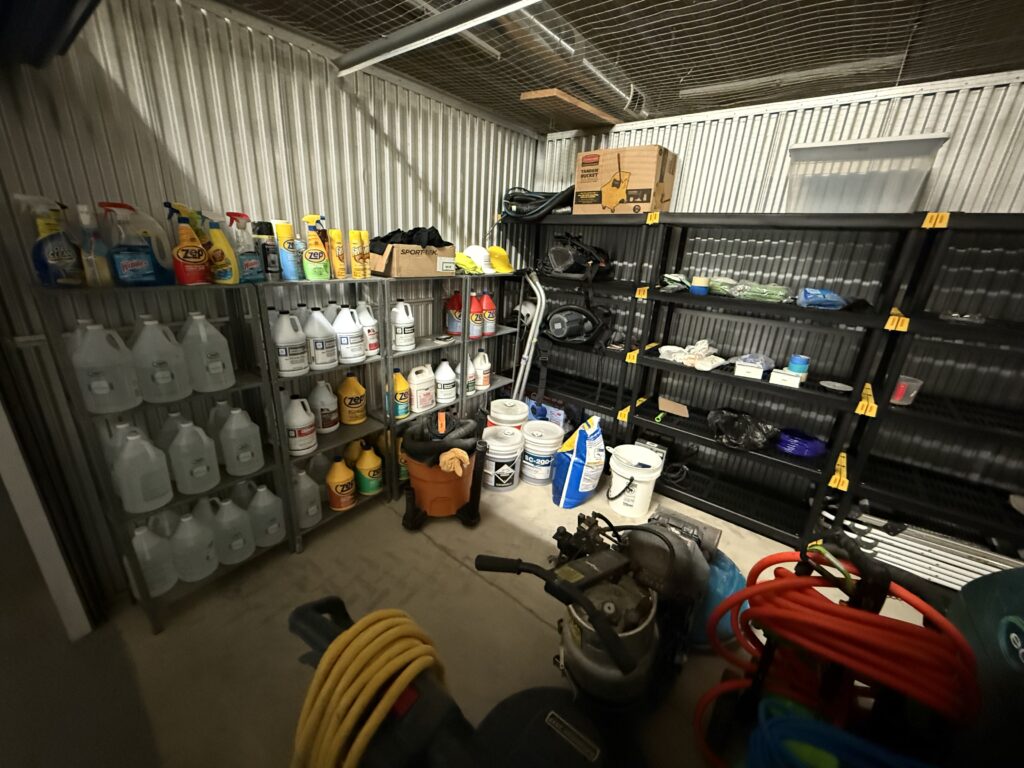
How to stage professionally:
- Supply caches placed every 100 to 150 feet in areas with a lot of traffic
- Mobile carts are already loaded and set up at important locations
- Backup supplies kept in places that are easy to get to (not locked up in one room)
- There are emergency spill kits in every food service area
Response teams are ready to go:
- Not walking around looking for issues.
- Put in certain areas with clear lines of division.
- Test communication protocols before the doors open.
- Everyone knows when and how to call for backup.
The best venues finish setup well before doors open, with everything staged and tested. The ones that don’t? They’re making emergency runs mid-show while guests post photos of trashed bathrooms and empty soap dispensers.
Live Event Cleaning: Managing Teams During Peak Venue Traffic
Once guests start to arrive, it’s time to get to work. Here’s how top venues in Tampa deal with the chaos:
The Truth About the Bathrooms
The minimum number of toilets for 100 guests is one. But the standard doesn’t say that restroom traffic isn’t evenly spread out at a big event. There will be surge times, like halftime, intermission, and the end of the event, when usage goes up by 300–400%.
What works:
- Checks every 15 minutes during normal times
- Monitoring all the time during peak times
- During peak times, there are two-person teams (one cleaning and one restocking).
- Smart sensors in some places that let you know when supplies are running low
The argument: technology vs. boots on the ground
Some newer venues have put in sensors that tell them how many people are there and how much stock they have.
They are useful, but the truth is that you still need experienced staff to check in person at this scale. Sensors can tell you that a bathroom is busy, but they can’t tell you that someone just spilled a drink on the floor or that a plumbing problem is getting worse.
How to Handle a Spill
When thousands of people are carrying food and drinks, spills aren’t rare; they’re always happening.
The rule of 90 seconds:
You need to respond to every spill within 90 seconds. Not completely cleaned, but found, marked, and put in a safe place.
Why? At this size, a wet floor is a nightmare for liability.
A system of color-coded priorities:
- Warning signs: Spills on walkways (danger of slipping)
- Yellow flags: Food scraps (can wait 5 to 10 minutes)
- Green flags: Small problems (scheduled rotation takes care of them)
Why “good enough” doesn’t work:
You can say “we’ll grab that later” at smaller events. At 50,000+ guests, “later” means someone´s already slipped, posted it on social media. and your venue reputation is trashed.
The Command Center Method
Here’s how the pros do it: they coordinate everything from one place.
This is what it looks like:
- A dedicated operations center, even if it’s just a table with radios.
- One person in charge of 20 to 40 cleaning staff
- Radio communication (not apps or texts; those are too slow and unreliable in crowded places)
- Real-time protocols for escalating problems
Easy. Quick. Works.
/radio /
Deep Cleaning After the Event: The Overnight Change
This is where the real work gets done. A different crew comes in when the last guest leaves and the lights come on.
The Deep Clean Operation runs from 11 PM to 7 AM.
What most people don’t see:
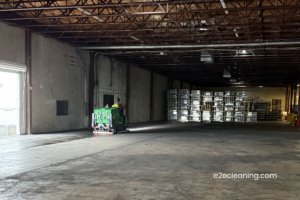
- Industrial floor scrubbers (not mops) that cover whole areas
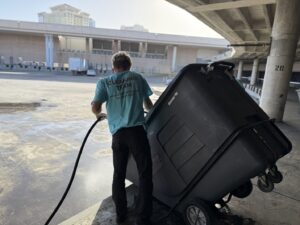
- Pressure washers for concrete surfaces
- Vacuums for businesses that could pick up a bowling ball
- 30 to 50 people working together in groups
Tampa’s Logistical Edge: The city has commercial cleaners who’ve done massive events before. Benefits:
- Experienced crews on huge crowds.
- Nearby staging warehouses for equipment (quick deployment).
- Backup staff on hand in case someone calls out.
- Built relationships with the people in charge of the venue.
The Timeline That Works
Hours 1–4: Cleaning the surface and getting rid of debris
- Picking up trash from every area
- First cleaning of the floor (getting rid of obvious trash)
- Cleaning the surfaces of the bathroom
- Sweeps of the seating area
Hours 5–6: Cleaning the restroom and doing detail work
- Cleaning and scrubbing the floors
- Full cleaning of the bathroom
- Detailing glass and surfaces
- Disinfection of high-touch points
Hours 7–8: Last Check and Getting Ready for the Next Day
- Supervisors conduct quality walkthroughs.
- Restock supplies for the next event.
- Check and store equipment.
- Final Approval before venue handoff.
The place looks like nothing happened by 7 AM. That’s the way it is.
What Doesn’t Work: Common Mistakes When Cleaning Big Places
Let’s talk about what really goes wrong when venues try to handle more than 50,000 guests without the right systems in place.
Not enough staff during peak times
What is the most common mistake? Figuring out how many staff members to hire based on average traffic instead of peak capacity.
How this looks:
- A lot of people to handle steady-state operations
- Total chaos during the break or the end of the event
- Restrooms that get dirty quickly during busy times
- Instead of keeping zones, staff are running from one emergency to the next.
Why it doesn’t work: You don’t see “normal” traffic at big events. You get huge spikes that can triple the number of people using the bathroom and the number of spills in just 15 minutes. When it matters most, you’re already behind if you staff for the average.
In-House vs. Outsourced: What to Consider
Some managers of venues like to keep everything in-house so they can keep an eye on things. This might work, but it has its own problems:
- Big investments in equipment are needed for events that happen once in a while.
- Hiring more than 50 people for events that happen from time to time raises labor costs.
- Training for specific events takes time and money.
- Call-outs leave last-minute staffing gaps.
Many venues find that a mix of in-house teams for daily operations and specialized contractors for big events works best. Your budget, event frequency, and operational capacity determine the right approach.
Poor Communication Systems
This one is sneaky but deadly.
Using texting or apps instead of communicating via radio during live events can lead to poor communication.
Why texts and apps don’t work well on a large scale:
Messages take longer to get through in crowded places where thousands of phones are trying to get a signal. When staff members’ hands are full, they can’t respond quickly. During emergencies, group chats turn into unreadable noise.
There is no clear chain of command or system for setting priorities.
The price: A spill that should have taken 90 seconds to clean up takes 10 minutes because messages are bouncing around in a group chat. Someone has already slipped by then, or worse, posted about it on social media.
Not enough planning before the event
Some places call the morning of the event “preparation time.” That’s not getting ready; that’s panic.
Signs that you’re not ready enough:
- Staging supplies in the morning of the event
- Giving staff members zones to work in as guests arrive
- Testing communication tools while setting up
This leads to confusion during the event, missed problems, slow response times, and tired staff who are already behind before the first guest arrives.
The “We’ll Handle It” Way of Thinking
One of the most dangerous mistakes is thinking that you can handle bigger events the same way you handled smaller ones.
The numbers don’t add up:
- A 5,000-person event is not the same as a 50,000-person event.
- It’s a lot harder to coordinate, plan, and manage risk.
- What you can “eyeball” at smaller scales needs systems and rules at larger scales.
- Coordinating five cleaners is easy; coordinating forty is a whole different skill.
Why reactive cleaning doesn’t work on a large scale: Without systems in place, you’re always reacting to problems after they’ve already affected guests. With more than 50,000 people there, you can’t afford to be reactive. The damage happens faster than you can stop it.
Here’s what all these failures share: they treated large-event cleaning like something you can handle on the fly. At 50,000+ guests, winging it isn’t bold—it’s reckless.
It’s Not Magic, It’s Systems
Tampa’s top-performing venues budget for cleaning as a core operational expense, not an afterthought. They staff accordingly and plan proactively.
The 50,000 guests never see the zone maps, staged supplies, radio-coordinated response teams, or overnight crews executing the reset. They only experience clean bathrooms, clear walkways, and professional surroundings.
That invisible execution is what separates successful venues from disasters waiting to happen.
Planning a large-scale event? Build cleaning into your operational strategy from day one. At 50,000+ guests, cutting corners doesn’t save money. It destroys your reputation.