A construction project can still look unfinished after the trades leave because trade cleanup is not the same as a final commercial clean.
Fine dust, floor residue, adhesive haze, debris in corners, dirty vents, marked glass, and overlooked high-touch areas can remain after construction work is done.
Post-construction cleaning removes those details so the space is ready for walkthroughs, inspection, occupancy, or opening day.
The last trade leaves. The tools are packed. The punch list is getting shorter.
Then the walkthrough starts.
Dust is sitting on the ledges. There is adhesive haze on the glass. The floors look dull even though they were just installed. Corners still have debris. Restrooms feel half-finished. The space is technically past construction, but it does not feel ready for the owner, tenant, inspector, or customer.
That is the gap post-construction cleaning is supposed to close.
On most Tampa commercial construction projects, the final clean is the step that turns a construction site into a space ready for inspection, handoff, occupancy, or opening day.
E2E Cleaning Services helps contractors, property managers, owners, and facility teams with post-construction cleaning in Tampa when a project needs to look finished, clean, and ready for the next person walking through the door.
Broom-clean is not client-ready
A lot of construction sites get cleaned just enough for the next phase to happen.
That might mean removing bulky debris. Tools are cleared. The obvious trash is gone. Someone sweeps the floor so people can move through the space.
That is useful, but it is not the same as a final clean.
A broom-clean space may still have:
- Visible dust door frames, trim, ledges, and fixtures
- Fine particles on new floors
- Film on glass and mirrors
- Paint specks near baseboards
- Adhesive residue on surfaces
- Dirty corners behind doors or equipment
- Dust inside restrooms, breakrooms, and common areas
- HVAC dust that keeps settling after the first pass
Generally, this comes down to scope, not neglect.
Trades are focused on finishing their work. Contractors are focused on deadlines. Owners are focused on opening, leasing, or turning the building over.
When nobody clearly owns the final clean, the details surface at the worst possible moment: the walkthrough.
The details that make a new space feel unfinished
People notice the big things first. New walls. New floors. Fresh paint. Installed fixtures.
Then they notice what does not match. A haze on the glass that catches the light. Grit underfoot on a floor that was just laid. Dust on a sill nobody wiped.
A finished space should feel settled. Construction residue keeps it reading like work is still happening.
Dust on ledges, vents, and trim
Construction dust does not stay where the work happened. Heavy dust settles on door frames, baseboards, window sills, vents, light fixtures, cabinet tops, and high ledges.
That matters because dust above eye level eventually moves back into the room. Airflow, doors opening, HVAC cycles, and foot traffic can keep dust circulating after the first sweep.
OSHA treats construction dust as more than a housekeeping issue when it creates worker exposure risks. Its construction silica guidance is a useful reminder that fine dust needs to dust control to meet safety standards, not brushed aside.
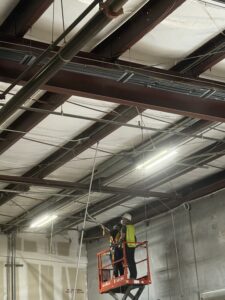
For spaces with high ceilings, exposed structures, warehouses, gyms, or large common areas, high dusting with HEPA vacuums and professional-grade equipment may be part of the cleanup conversation.
Glass haze and adhesive residue
Glass is one of the fastest ways to tell whether a space is actually ready.
New doors, windows, partitions, and storefront glass often hold fingerprints, sticker residue, adhesive haze, and construction film. Under normal lighting, it may not look bad. During a walkthrough, it stands out fast.
That small detail can make a newly built space feel rushed.
Floors that look tired before anyone moves in
Floors take abuse during construction.
Dust, footprints, drywall residue, adhesive, paint specks, and traffic from trades can make new flooring look dull before operations even begin.
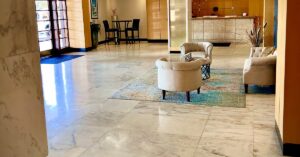
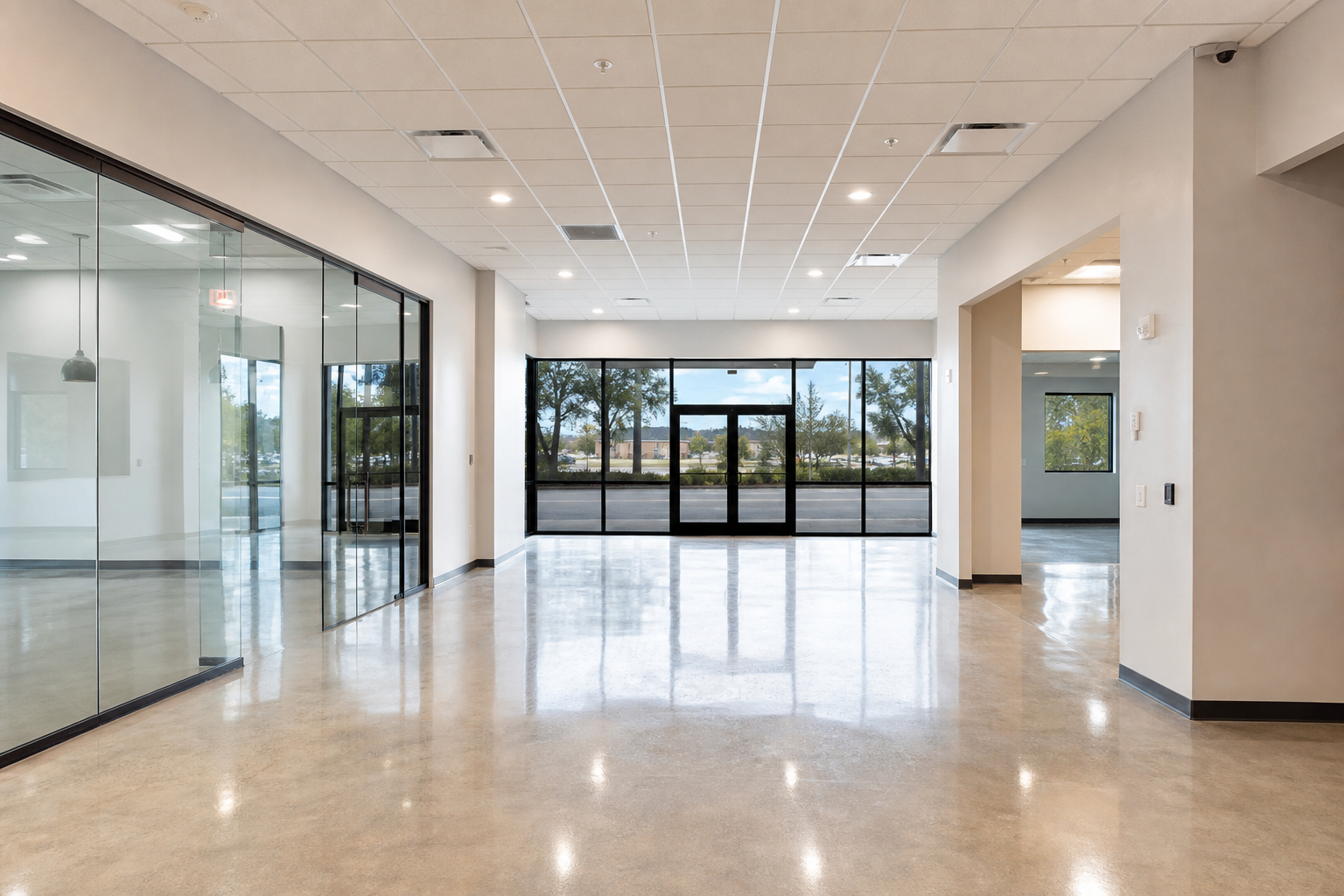
This is especially noticeable in commercial lobbies, medical offices, retail spaces, corridors, and common areas where the floor is part of the first impression.
If the project involves warehouse or industrial space, floor cleanup may overlap with warehouse cleaning or specialized floor care.
Restrooms and breakrooms that still feel like a job site
Restrooms, breakrooms, and staff areas often get finished late in a project. They also collect dust, packaging, fingerprints, and residue from multiple trades.
Before occupancy, these areas need more than a quick wipe. They need to feel usable, stocked, clean, and ready for employees, tenants, guests, or customers.
Corners, edges, and behind-the-door areas
This is where rushed cleanups show.
The center of a room might look fine. The edges tell the truth.
Baseboards, corners, door swings, thresholds, cabinet bases, and behind-fixture gaps are where drywall dust and debris settle and stay.
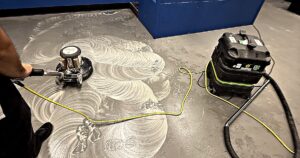
A floor buffer covers the open center of a room in one pass. The edges need to be done by hand.
Why Tampa commercial projects feel this pressure
Tampa runs on tight timelines.
Commercial buildouts, office renovations, medical spaces, retail openings, restaurant projects, warehouses, hospitality spaces, and tenant improvements often move on tight timelines.
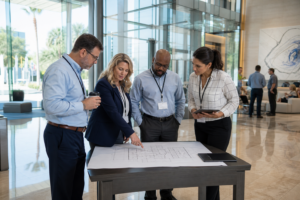
The last few days before handoff can get crowded with final trades, inspections, punch-list items, deliveries, and owner walkthroughs.
That is exactly when cleaning gets squeezed.
The building may be almost ready, but almost ready is not enough when:
- A tenant walkthrough is scheduled
- A retail opening is already promoted
- A medical office needs to prepare for patients
- A warehouse needs to restart operations
- A property manager needs to turn over a suite
- A contractor wants the final impression to match the quality of the work
Tampa’s humidity can also make dust and residue feel worse. Fine particles stick to surfaces. Glass and floors show film. High-touch areas start to feel grimy before anyone has officially moved in.
The EPA also warns building teams to protect indoor air quality during construction and renovation because uncontrolled dust and moisture affect occupied spaces. That guidance applies directly to commercial handoffs where people are about to start using the building.
A final clean is the last step that controls that dust and residue before the space is occupied.
Who owns the final clean?
This is where many construction closeouts get messy.
Everyone assumes someone else has it covered.
The general contractor may expect trades to clean their areas. The trades may only remove their own materials. The tenant may assume the property manager is handling it. The property manager may expect the contractor to deliver the space ready. The facility team may not get involved until after handoff.
That leaves a gap.
A strong post-construction cleaning plan should answer five questions before the final week:
- Who is responsible for rough debris removal?
- Who is responsible for detail cleaning before walkthrough?
- What areas need final cleaning after all trades leave?
- What surfaces require special care?
- What deadline matters most: inspection, handoff, occupancy, or opening day?
If those answers are unclear, the final clean becomes a last-minute scramble.
For broader planning, E2E’s guide on how to plan for post-construction cleaning breaks the process into rough cleaning, light cleaning, and final cleaning. This article is about the last mile: the details that decide whether the space feels ready.
What a commercial final clean should cover before handoff
Every project is different, but this post-construction cleaning checklist covers the areas people see, touch, and judge first. This is thorough cleaning, not a wipe-down.
Floors and baseboards
Floors should be cleaned based on surface type.
That may include vacuuming, dust removal, mopping, spot cleaning, scrubbing, or deep cleaning. Baseboards and edges should be checked carefully because they collect dust and residue during construction.
Glass, doors, and frames
Interior glass, entry doors, partitions, frames, handles, and thresholds should be cleaned streak-free, so the first impression does not include fingerprints, smudges, film, stickers, or adhesive marks.
Vents, ledges, and fixtures
Dust should be removed from vents, ledges, light fixtures, and exposed surfaces until they are dust-free, so they stop sending fine particles back into the room.
Restrooms and breakrooms
Kitchens and bathrooms should be cleaned, sanitized, and checked for dust, residue, trash, fixtures, touchpoints, mirrors, counters, partitions, and floors.
Touchpoints and visible surfaces
Doors, handles, counters, cabinets, railings, switches, reception areas, waiting rooms, and shared high-touch surfaces should be wiped and given a detailed clean before occupancy.
Entry areas and common spaces
Entrances, lobbies, corridors, elevators, stairwells, and common areas should feel finished. These spaces often shape the first impression before anyone reaches the main room.
Light debris and leftover materials
Packaging, labels, tape, small debris, and leftover job-site materials should be removed before the client or tenant sees the space.
When to bring in a commercial post-construction cleaning team
Small touchups do not need a professional cleaning crew. The jobs that call for one share a few signs. That includes:
- Final inspection is coming up
- The tenant walkthrough is already scheduled
- The owner is visiting the site
- Multiple trades worked in the same space
- Dust is still settling after repeated cleaning
- Glass, floors, or high surfaces are still showing residue
- The space needs to be open to employees, customers, patients, or guests
- Internal teams do not have the equipment, time, or training to handle the final clean
That is when professional cleaners and post-construction cleaning services earn their place, with the equipment and the crew to finish the space on the schedule the handoff demands.
Professional post-construction cleaning is especially useful for offices, retail buildouts, medical suites, restaurants, warehouses, industrial spaces, hotels, and common areas where presentation and timing both matter.
For restaurant-specific projects, E2E also has a separate restaurant final cleaning checklist focused on food-service readiness.
The final clean protects the handoff
A project can be built well and still read as unfinished at the walkthrough.
The final clean is what closes that gap. It clears the dust, film, and residue that an owner or inspector notices first, so the space reads as ready to use instead of stuck between construction and operations.
If your Tampa construction project is close to handoff, E2E Cleaning Services can help turn the space from job-site clean to move-in ready, so the walkthrough does not turn into rework.
Request a quote for Tampa post-construction cleaning or call E2E Cleaning Services at (813) 819-0221 for a free estimate.
FAQ
What is the difference between construction cleanup and post-construction cleaning?
Construction cleanup usually removes large debris, trash, and materials so the job site can keep moving. Post-construction cleaning goes deeper.
It removes fine dust, residue, glass haze, floor film, touchpoint grime, and detail issues so the space is ready for inspection, handoff, occupancy, or opening.
When should post-construction cleaning happen?
Post-construction cleaning usually happens after major trades are finished and before the final walkthrough, inspection, tenant handoff, or opening day. Some larger projects may need phased cleaning during construction and a final detail clean at the end.
Who needs post-construction cleaning in Tampa?
Post-construction cleaning is useful for Tampa contractors, property managers, owners, developers, facility teams, retail operators, medical offices, warehouses, restaurants, hotels, and commercial tenants preparing a space for use.
What areas are most often missed after construction?
Common missed areas include ledges, vents, baseboards, corners, glass, door frames, thresholds, restrooms, breakrooms, high-touch surfaces, and floor edges. These details often decide whether the space feels finished during a walkthrough.
Does E2E handle commercial post-construction cleaning in Tampa?
Yes. E2E Cleaning Services provides commercial post-construction cleaning in Tampa and surrounding areas. The team can help with dust removal, debris pickup, detail cleaning, floors, glass, restrooms, common areas, and final cleanup before handoff or occupancy.