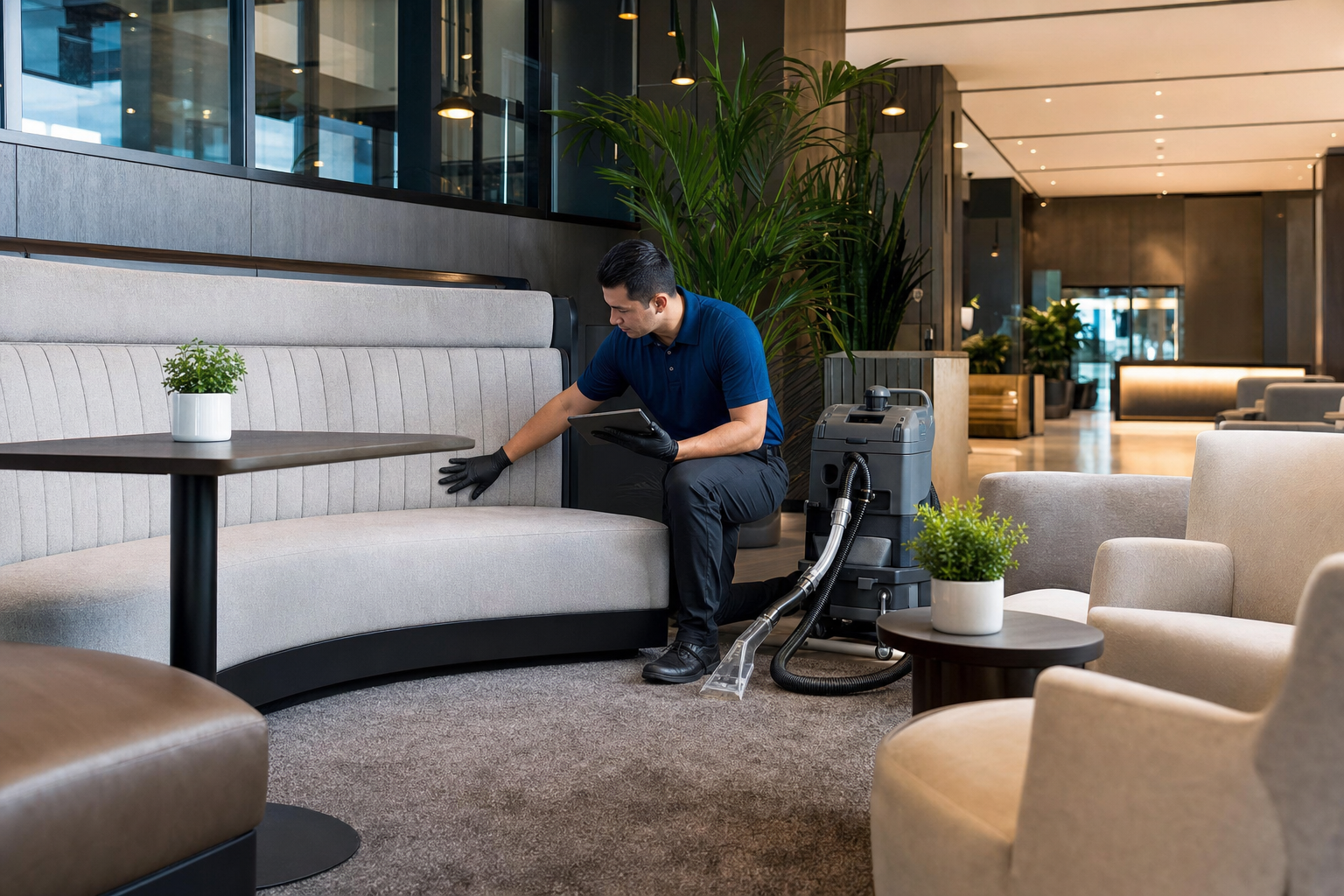
A restaurant can have clean floors, wiped tables, and a restroom checklist signed every hour. Then a guest sits in a stained booth, leans against a dusty banquette, and notices a curtain speckled with last night’s spicy sauce.
Soft surfaces work that way. They can look fine from across the room and still hold dust, oils, and odors that routine cleaning does not always reach.
Upholstery behaves differently, collecting soil in the fibers day after day, food particles and drink residue in a restaurant or bar, until the buildup makes furniture look older than it is
Curtains and drapes are easy to overlook, since no one handles them like a table or door handle, yet they collect dust, odors, and moisture. Florida humidity adds moisture to that buildup, raising the odor and mold risk in curtains near doors and windows that stay open.
Why this matters for restaurants and bars
Guests slide in and out of booths, drinks spill, and sauces drip, while fried food odors and patio smoke settle into the fabric over time.
More often it is a booth that feels sticky at the edge, a chair that smells stale, or fabric that looks dull even after the room has been cleaned.
For restaurant owners and managers, this matters in three ways.
- Guests touch the seating, so a dirty seat undercuts a clean table just as fast.
- A stale smell that lingers after the floors are cleaned usually comes from the fabric itself.
- Crumbs in the seams and a worn-looking bar stool tell guests the room isn’t cared for, even when it is.
Soil buildup and hard-to-clean materials create avoidable pressure in a food service environment. The FDA Food Code makes the same point for food safety and cleanable surfaces.
A clean restaurant should not lose reviews because the soft furniture tells a different story than the rest of the room.
Check these areas first:
- Booth seats and backs, especially seams, corners, and edges
- Banquettes and upholstered wall seating
- Bar stools and lounge chairs
- Host-stand seating or waiting benches
- Curtains, drapes, and fabric dividers
- Private dining room chairs
- Event seating and soft furniture used for banquets
Why does office lobby seating need regular cleaning?
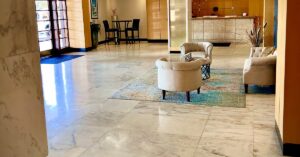
Office lobbies and reception areas work like a handshake. Clients, vendors, applicants, tenants, and visitors form an opinion the moment they sit down.
Soft seating is part of that opinion too. The dusty seams on a chair, or the dust lines on a curtain, register with a visitor even if they never mention it.
The EPA’s office indoor air quality guidance names housekeeping and furnishings among the contributing factors.
Upholstery cleaning covers one piece of that picture: the dust, allergens, and odors that build up in soft surfaces, exactly where a hard-surface-only cleaning plan falls short.
In an office lobby, look here first:
- Reception chairs and couches
- Conference room chairs
- Waiting room furniture
- Executive office seating
- Breakroom chairs with fabric cushions
- Curtains and drapes near windows or entrances
- Soft seating in tenant lounges, clubrooms, and shared amenity areas
Inspect these areas under normal lighting, from the guest’s angle. Check the arms, seams, corners, and backs. Those places usually show the truth.
What OSHA and CDC guidance actually says
OSHA requires workplaces and walking-working surfaces to be kept clean, orderly, and sanitary under 29 CFR 1910.22, and sanitation requirements under 29 CFR 1910.141 may apply in certain facilities.
How often booths, lobby chairs, or curtains actually get cleaned is left to each facility’s own maintenance plan.
Those standards are broader than upholstery, but the same point applies: the areas a routine checklist skips are exactly where a real cleaning plan needs to reach.
The CDC facility cleaning guidance is more specific about soft surfaces, recommending regular cleaning of high-touch surfaces and products suitable for carpets, rugs, and drapes.
Upholstery, curtains, and lobby furniture rarely make a daily checklist. OSHA and CDC guidance both point to the same fix: give them their own spot on the schedule.
How often should commercial upholstery be cleaned?
There is no single schedule that fits every building. Frequency depends on use, fabric type, food exposure, humidity, and guest traffic.
A restaurant booth used daily may need cleaning more often than a conference room chair used twice a week, and a medical office or senior living facility may need tighter standards.
A simple way to plan it is :
| AREA | INSPECTION FREQUENCY | MAINTENANCE APPROACH |
| High-traffic restaurant and bar seating | Weekly | Quick spot treatment between visitsm professional cleaning on a recurring cycle |
| Office lobby and waiting room furniture | Monthly | Spills handled as they happen, deep upholstery cleaning |
| Curtain and drapes | Ongoing, as dust, odors, stains, or moisture appear | Cleaning time around facility access and manufacturer care needs |
| Event and banquet seating | Before and after major events | Especially important when food and drinks are involved |
The greater issue is timing. If the furniture looks dirty to a guest, the schedule waited too long.
What professional upholstery cleaning should include
Professional upholstery cleaning starts with identifying the material, since leather, vinyl, microfiber, fabric, and suede each respond differently to moisture, heat, and cleaning chemistry. Most fabric upholstery responds best to hot water extraction rather than shampooing, because extraction pulls soil out instead of leaving residue that attracts more dirt.
A professional walkthrough should look at:
- Fabric type and manufacturer care needs
- Stains, odor sources, and heavy-use areas
- Colorfastness and fabric sensitivity
- Drying time and room access
- Food-service timing, guest traffic, or office hours
- Whether curtains can be cleaned in place or need another process
E2E Cleaning’s upholstery cleaning service matches the process to the material instead of running one method on everything, and pairs well with deep cleaning, janitorial, and office cleaning for facilities that want the soft-surface buildup covered too.
Get the missed areas on the cleaning plan
People can make quick judgments in a restaurant, office, or lobby. They notice the smell coming in, the seat they pick, how the booth, lobby chair, or curtain looks: cared for or worn. A cleaner room builds trust quicker, which translates to a better dining experience in a restaurant or bar, a stronger first impression in an office lobby, and a shared space that never feels stale in between deeper cleanings.
If guests, tenants, employees, or clients are sitting on the upholstery, leaning against it, or walking past it every day, it should be part of the cleaning plan.
E2E Cleaning provides professional deep cleaning for restaurants, bars, and office lobbies, and can review your furniture and curtains to recommend a schedule built around how your space is used. We serve Central and Southwest Florida.
FAQs on Restaurant and Office Upholstery Cleaning
Why should restaurants and bars clean upholstered seating?
Restaurant and bar seating picks up food, drink spills, body oils, and odor from everyday use. Wiping tables and cleaning floors don’t reach that buildup. Professional cleaning does.
How does upholstery cleaning help an office lobby?
Lobby furniture is one of the first things clients and visitors touch. Clean soft seating makes the reception area look cared for and feels welcoming to sit in.
How are tough stains removed from restaurant booth upholstery?
Tough stains usually need more than surface wiping. A specialist identifies the stain type and fabric first, then uses hot water extraction or a targeted spotting agent matched to that fabric, since the wrong product can set a stain rather than lift it.