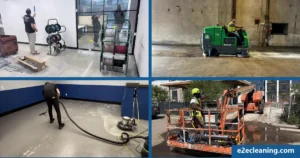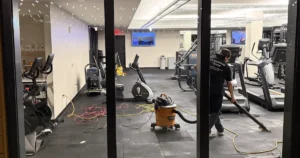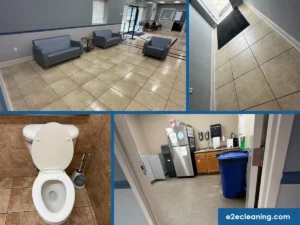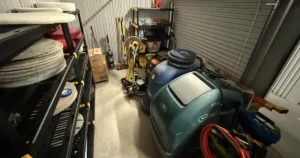
Preventative floor care usually costs less than reactive floor restoration because it protects the surface before damage spreads.
A floor care plan can schedule routine cleaning, burnishing, carpet extraction, finish touch-ups, and periodic strip and wax work before traffic patterns, moisture, grit, and neglect force a larger reset.
Reactive restoration has its place. Some floors need a full strip, polish, repair, or extraction when coatings fail, soil reaches the backing, or stone loses its finish.
The problem is waiting until the floor looks bad enough for everyone to notice. By then, the job often takes more labor, more chemistry, more drying time, more scheduling coordination, and more disruption to the building.
For Tampa, Orlando, and Florida facility teams, the math is simple: sand, rain, humidity, entry traffic, rolling carts, and daily foot traffic all wear floors down.
E2E Cleaning Services builds commercial floor cleaning and restoration support into broader maintenance plans so facilities can protect appearance without turning every floor problem into an emergency project.
What preventative floor care means in a commercial building
Preventative floor care is the planned work that keeps floors from reaching failure. It is not one service. It is the right mix of daily, weekly, monthly, and periodic tasks based on material, traffic, soil load, and business hours.
| Building type | Where the care concentrates | What routine care looks like |
| Office | Carpeted walk lanes and entries | Consistent vacuuming, spot treatment, entry mat attention, and scheduled carpet extraction before walk lanes turn gray |
| Medical office or school | Restrooms, entries, waiting areas, and corridors | More frequent hard-surface cleaning |
| Retail or banking | The lobby and customer-facing path | Protecting those floors, because they carry the first impression of the business |
A practical plan works up in steps.
Dust mopping, wet mopping, and auto scrubbing handle daily soil.
Buffing and burnishing keep the finish in shape between major services.
Finish repair deals with worn spots, and carpet cleaning and spot removal do the same job on soft floors.
A full strip and wax comes last, when the finish can no longer be restored by maintenance.
Each step happens before the next, more expensive one is needed.
Planned care matters for safety too. OSHA’s walking-working surfaces guidance notes that slips, trips, and falls on working surfaces are serious workplace hazards.
Floor maintenance does not replace a full safety program, but clean, dry, well-maintained walking surfaces support one.
What reactive restoration really costs
Reactive floor restoration starts after the floor has already crossed a line. The finish is yellowed or scratched through.
Carpet traffic lanes stay dark after routine vacuuming. Terrazzo or marble loses its reflectivity. Concrete collects embedded soil.
Staff and visitors notice the problem before the maintenance plan does.
The invoice is only one part of the cost.
A reactive project can require after-hours access, furniture moving, room closures, longer dry times, odor control, equipment staging, and more supervisor coordination.
If the work touches multiple sites, the scheduling burden grows. One neglected lobby may be manageable. Ten neglected lobbies across a service area become a project.
Reactive work can also compress decision making. Facility managers may have to approve a larger scope quickly because the floor now affects customer experience, tenant complaints, audit readiness, or executive walk-throughs.
That pressure makes it harder to compare methods, review product choices, or stage the work in a way that protects operations.
Restoration is sometimes unavoidable.
A floor may have years of built-up finish, construction residue, improper chemicals, water intrusion, or heavy damage from carts and equipment.
E2E handles those situations through services such as floor cleaning and restoration, commercial carpet cleaning, and surface-specific polishing. The better question is whether the floor had to reach that point.
Where preventative care saves money first
The first saving usually comes from labor control. Planned floor care lets the cleaning company route people, equipment, and supplies with the normal schedule.
Reactive restoration often needs a separate crew, specialty equipment, more setup time, and more management attention.
The second saving comes from protecting the floor system itself.
Finish layers are cheaper to maintain than replace.
Carpet fibers are easier to clean before soil grinds into the backing.
Stone and terrazzo respond better when polishing supports an existing maintenance history rather than trying to recover years of wear at once.
The third saving comes from reduced disruption.
A scheduled floor care plan can work around business hours, tenant needs, branch hours, school calendars, healthcare traffic, or retail peak periods.
Emergency restoration usually has fewer good windows.
There is also a reputation cost.
Visitors judge a building by what they see and feel underfoot: dull lobby tile, stained carpet, sticky breakroom floors, and tracked-in grit near the entrance.
Preventative care keeps those details from becoming the first thing people remember.
Why floors fail faster in Florida facilities
Florida buildings face a rough combination: moisture, sand, pollen, high foot traffic during rain events, and frequent transitions between outdoor and air-conditioned space.
Entry areas take the hit first. So do elevators, corridors, restrooms, cafeterias, fitness areas, teller lines, reception areas, and warehouse-office transitions.
Rainy-day traffic brings water and grit inside. Grit acts like sandpaper under shoes, rolling chairs, carts, and floor machines.
Moisture can make soil spread faster and can create slip concerns if entry care is weak. Humidity can also affect drying times and scheduling for certain floor processes.
That does not mean every building needs constant restoration. It means the floor plan should match the building.
A lightly used back office does not need the same schedule as a lobby that handles customer traffic all day. A medical office needs different attention than a warehouse breakroom. A property manager overseeing several tenants needs a plan that separates common areas, tenant spaces, restrooms, and high-visibility entrances.
E2E Cleaning is based in Tampa and serves commercial clients across Florida, including Tampa, Orlando, St. Petersburg, Clearwater, Wesley Chapel, Land O’ Lakes, Zephyrhills, and beyond.
That local experience matters because floor care intervals should reflect the building’s actual traffic and climate, not a generic checklist.
How to compare floor care plans without guessing
Facility managers should ask cleaning companies to explain the method, frequency, and trigger points for floor work.
A clear plan should answer four questions:
- what gets done routinely
- what gets inspected
- what conditions trigger periodic service
- what requires restoration
| Floor type: | Hard floors | Carpet | Stone, terrazzo, concrete, and specialty surfaces |
| What to ask: | How the company decides between mopping, auto scrubbing, buffing, burnishing, top scrubbing, recoating, and full strip and wax | How spots are handled between scheduled extractions, how walk lanes are identified, and whether entry mats are part of the conversation | Whether the company has separate procedures for those materials |
| What a clear answer includes: | The routine task, what gets inspected, and the condition that moves a floor from one step to the next | A spot-treatment routine between extractions, named walk lanes, and a plan for entry mats | A written procedure for each material |
Product choice matters too. EPA’s Safer Choice program helps purchasers identify cleaning products with ingredients that meet EPA criteria for human health and environmental safety.
That does not mean every facility will use the same products, but it gives buyers a credible reference point when discussing chemicals, floor cleaners, and purchasing standards.
Documentation matters as much as the equipment.
A floor care plan should show where work happens, how often it happens, who checks it, and how exceptions get handled. If the plan cannot be written down, it will be hard to manage across shifts or locations.
When restoration is the smarter move
Preventative care is not a magic fix. Some floors are already too far gone for maintenance alone. A company should be honest when restoration is the better answer.
Full restoration may make sense when finish has worn through to the floor, when wax buildup is trapping soil, when carpet has deep traffic lanes or odor, when stone has lost its finish, when concrete needs polishing, or when a previous cleaning method damaged the surface.
In those cases, the right move is to reset the floor and then build a maintenance plan that protects the investment.
This is where a walkthrough matters. E2E can look at floor type, damage, traffic patterns, access limits, drying windows, and business operations before recommending a path.
A lobby that needs full strip and wax should not be sold a light buffing plan. A carpet that needs extraction should not be treated like a quick spot-cleaning issue.
The scope should match the surface.
What facility managers should ask before approving floor work
Before approving a floor care or restoration proposal, ask for plain answers:
- What traffic patterns or stains did the walkthrough identify?
- What work can be done during normal service, and what needs after-hours scheduling?
- How will wet floors, drying time, odor, equipment staging, and tenant access be handled?
- What products and methods will be used on each surface?
- What should happen after restoration so the floor does not decline again?
The last question is the one many bids miss. Restoration without a maintenance plan is a reset button, not a cost-control strategy.
How E2E builds floor care into commercial cleaning
E2E Cleaning Services treats floor care as part of a larger facility standard. Floors connect to janitorial work, restroom cleaning, entry maintenance, day porter support, periodic deep cleaning, and the way a building presents itself to customers and staff.
That is why our janitorial services and commercial cleaning services can include floor observations and scheduled specialty recommendations instead of waiting for a surface to fail. For businesses reviewing a full scope, we can also tie the floor plan to a written commercial cleaning scope of work, so expectations are clear before service starts.
We are Tampa-based and were recognized as Minority-Owned Business of the Year 2024 by the Tampa Bay Chamber. We serve Florida commercial clients with White Glove cleaning standards, practical scheduling, and a focus on doing the work right the first time.
If your floors are starting to show wear, the cheapest next step is often a walkthrough before the problem grows. Call (813) 819-0221 or request a free quote.
Preventative floor care FAQs
How often should commercial floors be professionally maintained?
Frequency depends on floor type, foot traffic, soil load, weather exposure, and business hours. A high-traffic lobby may need more frequent attention than a back office.
The best plan starts with a walkthrough, then sets the routine cleaning, inspection, and periodic specialty service around how the building is used.
Is strip and wax always cheaper than maintaining the finish?
Not if the finish is still holding up. Maintaining it between major services can reduce how often a full reset is needed. Strip and wax is the right step when old finish has to come off, such as when buildup is trapping soil or the finish has worn through to the floor.
If the coating is still serviceable, buffing, burnishing, top scrubbing, or recoating may be the better step.
Can floor care be added to a janitorial contract?
Yes. Many commercial cleaning scopes include routine floor tasks, then schedule specialty services separately. The contract should state which floor tasks are recurring, which are periodic, and which require approval after inspection.
What is the biggest sign a floor needs restoration?
A floor may need restoration when routine cleaning no longer improves the appearance. Warning signs include finish worn through in traffic lanes, deep carpet stains, recurring odors, dull stone, embedded soil, or slippery residue after cleaning.