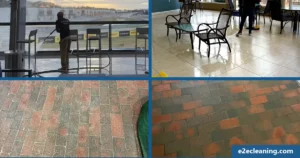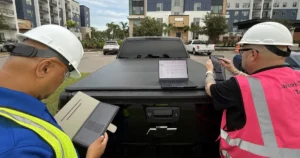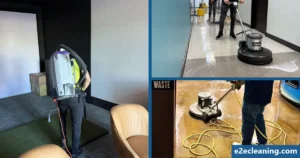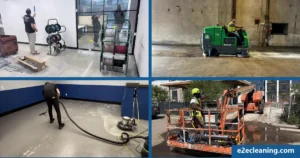
Gym cleaning responsibilities should be split between member courtesy wipe-downs, staff checks during operating hours, contracted cleaning of agreed accessible surfaces, and separately scheduled specialty work.
A member wiping a bench does not replace the facility’s cleaning plan. An evening cleaning contract does not automatically cover an empty wipe dispenser at noon or the floor beneath an anchored strength machine.
Those gaps are why each task needs an owner, a service window, and an access limit before you compare cleaning quotes. Without them, two quotes can look alike while covering different work.
For each task, settle three things before you compare cleaning quotes: who owns it, when it gets done, and what the crew can and can’t reach. Otherwise two quotes can look alike while covering different work.
Give each task an owner before setting the schedule
Read the table below against your own gym. For each area, can you say who handles it during the day, what the crew covers at its visit, and what limits where the crew can work?
A row you can’t answer is a gap to settle before you compare quotes.
The table is a planning example, not an E2E operating procedure or a record of a real gym account.
| Task or area | During-hours owner | Contracted task and window | Access limit and issue owner |
|---|---|---|---|
| Benches, grips, and consoles | Members follow courtesy wiping instructions; staff check condition and supplies. | Agreed accessible surfaces during the service window; list exclusions. | No internal components or relocation implied; gym manager resolves questions. |
| Wipe stations and restrooms | Named staff role checks stock and reports spills. | Agreed fixture cleaning, waste removal, and replenishment at the contracted visit. | Manager assigns dispenser repairs and supply shortages. |
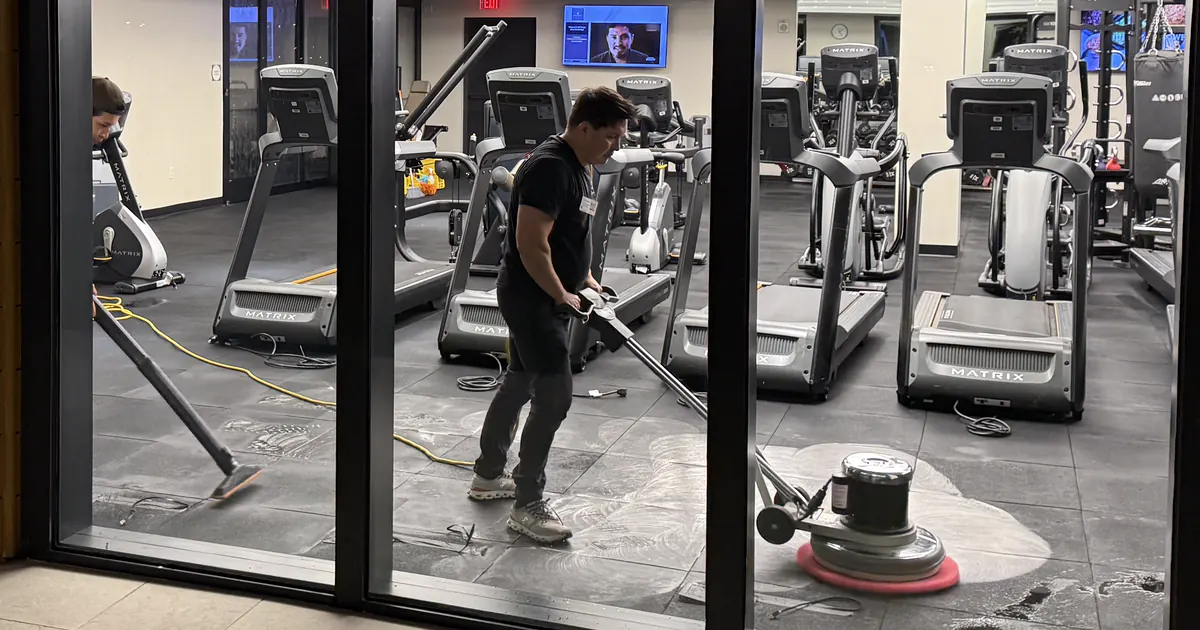
| Mats and open floor areas | Staff identify spills and restrict unsafe areas. | Surface-appropriate cleaning in the agreed window; specialty work priced separately. | Exclude blocked areas until safe access is arranged; manager owns access. |
| Floor beneath fixed or heavy machines | Staff report buildup and access restrictions. | Only safely accessible areas expressly included in scope. | Authorized equipment personnel assess any relocation; manager coordinates. |
For contracted coverage, E2E’s gym cleaning services in Tampa are the starting point for a facility-specific discussion. Bring this task split to the walkthrough so the proposal addresses the gaps rather than duplicating work your team already handles.
What staff still handle between workouts
For members to wipe down equipment themselves, the gym has to give them something to follow: posted instructions and the products it supplies. That makes the daytime upkeep a job for staff.
Someone checks the dispensers, someone orders replacements, and someone handles a station that runs empty, and these can be different roles, since buying wipes and replenishing them are separate responsibilities.
Restrooms and locker rooms work the same way. The contracted crew may clean them during its visit, but a leak or an empty soap dispenser during occupied hours still needs someone on the gym’s side.
Check intervals work best when they follow actual use rather than another facility’s hourly schedule.
A recurring janitorial services agreement can say which checks and replenishment tasks the crew includes, which shows where the crew’s checks end and the gym’s begin.
Accessible cleaning does not mean moving machines
The phrase “clean under equipment” needs a precise meaning. An open edge that can be reached safely is different from a floor area blocked by a fixed, anchored, or heavy machine, and a general cleaning line item does not give the crew permission to move that machine.
The walkthrough is where restricted areas get identified. From there, the gym manager refers any relocation decision to authorized equipment personnel and the manufacturer’s instructions.
Moving, repairing, or maintaining equipment is not part of a general cleaning scope.
If the crew can’t reach an area, it tells the gym manager and doesn’t count the area as cleaned. The manager then arranges access. If that means a separate service or closure, it is agreed before the area goes on the cleaning schedule.
Check compatibility and disinfectant directions separately
A product’s disinfectant label and an equipment manufacturer’s cleaning instructions answer different questions. One addresses permitted uses and application; the other addresses care of that particular surface or machine.
A product suitable for a restroom fixture may be unsuitable for upholstery, a console, or rubber flooring.
How much disinfecting a gym needs is a separate question from how to clean a machine. The CDC’s facility cleaning guidance, which includes gyms, distinguishes regular cleaning from disinfection and directs users to follow manufacturer instructions for electronics.
It does not prescribe disinfecting every gym surface after every use.
On the manufacturer side, Life Fitness’s equipment cleaning guidance points owners to approved cleaners in its operation manuals and cautions against spraying solutions directly onto its equipment. That is manufacturer-specific guidance, not a product rule for every brand.
Where disinfection is specified, record the product and applicable label directions. The EPA’s Six Steps for Safe & Effective Disinfectant Use explains checking use sites and surface types and keeping the surface wet for the stated contact time.
Do not substitute a universal dwell time or treat a quick wipe as proof that disinfection occurred.
Agree on access and the handback after closing
Confirm who admits the crew, which rooms remain locked, and whether members or employees will still be present.
For a 24-hour gym, define the work zone and how people will be kept out until it is ready for use.
Wet floors need an assigned response. OSHA 29 CFR 1910.22, General requirements, addresses workplace surface conditions, safe access, inspection, and correcting or guarding hazards. It does not mandate this table or a gym-specific cleaning interval.
Choose who checks completion and receives reports about blocked areas, damage, or missing supplies. E2E’s guide to janitorial quality assurance explains inspection and correction ownership.
You can also use the commercial cleaning documentation checklist as a starting point for the supporting records, such as the product, its label directions, and the contact time for any disinfectant used
Gym cleaning questions to settle before requesting a quote
Does hiring a cleaning company replace staff checks at a gym?
No. Staff checks stay necessary wherever the contract leaves occupied-hours coverage with the gym, so each of those gaps needs a named owner.
Does gym cleaning include the floor beneath machines?
It includes the floor beneath machines only to the extent the written scope and safe access allow. Equipment relocation is a separate decision for authorized personnel.
Who approves cleaning products for gym equipment consoles and mats?
The gym should name an approval owner, who checks the manufacturer’s instructions with the cleaning provider before a product is used.
Approvals apply to the specific surfaces present, so a product cleared for a console is not automatically cleared for the mats or the flooring.
Request a quote built around your own task split
A gym-cleaning quote starts with your operating hours, equipment and floor types, current staff duties, and any areas that need separate access. You can request a gym-cleaning quote or call (813) 819-0221, and scope and scheduling are confirmed after an assessment.