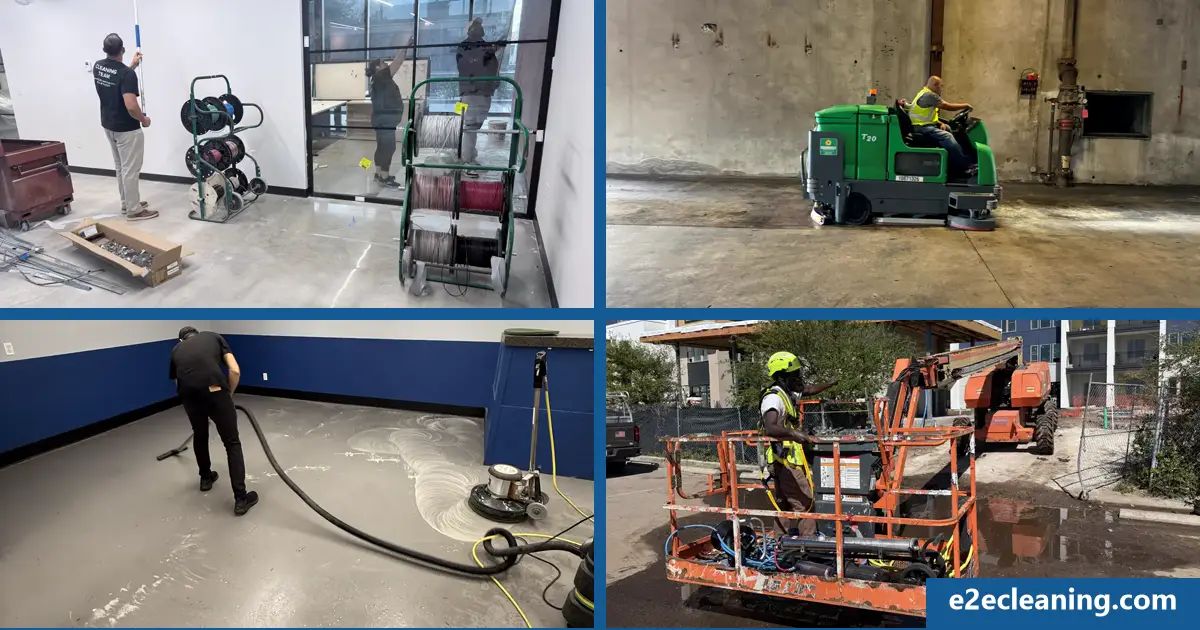
The cheapest janitorial bid usually costs more later when the price is low because important work was left out. A low number can hide too little service time, weak supervision, unclear supply terms, skipped floor care, poor backup coverage, or a scope that sounds complete until the building starts using it.
That does not mean the highest bid is automatically the best.
Facility managers should question every proposal. The danger is comparing monthly prices before comparing what each cleaning company is actually promising to do.
For offices, banks, medical suites, schools, retail properties, HOAs, industrial sites, and multi-location businesses, cleaning affects more than appearance.
It shows up in tenant complaints, restroom readiness, floor life, safety, and the time your team spends chasing problems. A janitorial bid should be judged by the cost of the whole service relationship, not the first monthly number on the proposal.
A low bid often starts with missing labor
Labor is the largest part of most janitorial proposals. If one bid is far below the others, the first question should be simple:
Where did the time go?
A realistic cleaning plan has to account for the size of the building, the number of restrooms, traffic levels, flooring types, trash flow, breakrooms, secure areas, entry points, elevators, stairwells, and service frequency.
A crew also needs time to open the building, stage supplies, move through the route, close out the visit, report problems, and handle periodic tasks that do not happen every night.
When a bid cuts labor too aggressively, the crew still has to finish the route in the hours the bid allows.
Restrooms get rushed. Detail dusting disappears. Corners are skipped. Floors get a quick pass instead of the right process. The cleaner may work hard, but the hours were never enough for the scope.
A better proposal explains how the schedule supports the scope.
It does not need to expose private pricing formulas, but it should give the buyer confidence that the staffing plan matches the building.
Cheap scope language creates expensive disputes
Some bids look complete because they use broad phrases: general cleaning, restroom service, floor care, trash removal, periodic detail work.
Those phrases are not enough. The proposal should name the spaces, tasks, frequencies, exclusions, and approval rules.
If a bid says floor care is included, does that mean vacuuming, mopping, machine scrubbing, buffing, carpet extraction, or strip and wax work?
If restroom service is included, does it include restocking? Who supplies liners, paper, soap, sanitizer, and specialty products? If high dusting or interior glass matters, how often does it happen?
E2E Cleaning’s guide to a commercial cleaning scope of work explains why these questions need to be answered before service starts.
Vague scopes make the bid easy to sign and hard to manage. Clear scopes make the price easier to compare and the service easier to hold accountable.
Supplies can turn a low price into a surprise invoice
Janitorial supplies are a common place for confusion. Some cleaning companies include chemicals and equipment but not consumables.
Some include liners but not paper products. Some bill usage separately. Some use a fixed supply allowance. None of those models is automatically wrong, but the bid should spell it out.
Supply costs can shift quickly when a building has heavy restroom traffic, public visitors, multiple breakrooms, special dispensers, or product restrictions.
A low bid that leaves supply ownership unclear can create empty dispensers, mismatched products, emergency purchases, or monthly charges nobody budgeted for.
Product standards also matter.
The EPA’s Safer Choice program gives purchasers a useful reference for cleaning products that perform and use ingredients selected for safer human health and environmental characteristics.
A janitorial bid does not need to turn into a chemistry manual, but it should state how products are selected, approved, stored, and replenished.
Weak supervision transfers the work back to your team
A cheap bid can lower its price by cutting supervision and account management. The savings show up on the proposal, and the cost shows up the first time a problem needs someone to follow up.
Without consistent supervision, your team becomes the inspection system.
Someone has to notice the same restroom issue, take photos, email the vendor, explain the scope again, follow up, and check the next visit. That time has a cost even if it never appears on the cleaning invoice.
A stronger janitorial proposal should explain who manages the account, how inspections happen, how issues are documented, and how repeat problems are corrected.
Quality control should connect to the written scope. Otherwise the inspection process becomes a vague walkthrough with no standard to measure against.
For multi-location businesses, supervision matters even more.
A low bid may cover several sites on paper, but the buyer needs to know how the cleaning company keeps locations from drifting into different standards after the first few weeks.
Floor care gets expensive when it is delayed
Floors are one of the easiest places to underbid because damage builds slowly. A proposal may include daily mopping or vacuuming while leaving out the periodic work that actually protects the floor surface.
Foot traffic grinds dirt into the surface. Finish wears unevenly. Entry areas break down first.
Carpet holds soil and odor. Tile and grout start to look older than they are. By the time the problem is obvious, the facility may need restoration work or even replacement instead of routine maintenance.
A janitorial bid should separate daily cleaning from periodic floor work and say plainly what is excluded. If strip and wax or carpet extraction isn’t in the price, the proposal should say so.
E2E handles that periodic work through its commercial floor cleaning, floor stripping and waxing and commercial carpet cleaning services.
A cheap bid often has no backup plan
Every cleaning company has to deal with callouts, turnover, traffic, weather, access problems, and schedule changes. The difference is whether those problems become the client’s problem.
A bid that is too lean may have no practical backup coverage. If the assigned cleaner is out, the building waits. If access fails, nobody escalates quickly.
If an event leaves the building with extra trash, it sits until the next scheduled visit. The vendor may apologize, but the facility manager still has complaints to answer.
Ask how the company handles missed service, backup staffing, supervisor escalation, after-hours access, and urgent requests.
For buildings that need daytime support, day porter services may be a better fit than forcing all cleaning into an after-hours schedule.
Safety shortcuts carry real risk
Janitorial work happens around wet floors, chemicals, ladders, and occupied workspaces.
Training, labeling, and proper equipment all cost time and money, which makes them easy to trim from a low bid.
According to the OSHA’s Safety Management resources, a proactive approach means finding and fixing hazards before they cause injuries or illnesses.
For cleaning buyers, that means asking practical questions that can catch risks early:
- How are wet floors marked?
- How are chemicals labeled and stored?
- How are ladders and equipment used and maintained
- How are incidents reported?
- How are new cleaners trained for the site?
Safety details may feel less visible than the monthly price, but they matter when something goes wrong. A bid that ignores them is not cheaper. It is incomplete.
The cheapest bid can damage trust inside the building
Cleaning problems become emotional fast because people see them directly. A dirty restroom, a sticky floor, or an empty soap dispenser tells employees and visitors that nobody is paying attention.
Once trust drops, the cleaning company has to work harder to recover. The client may add inspections, send more emails, involve more managers, or rebid the contract early. Those steps take time away from other work.
This is why E2E Cleaning approaches janitorial services and commercial cleaning services as an operational relationship, not a line item.
The goal is dependable service that helps your building run cleaner with fewer avoidable interruptions.
How to compare janitorial bids without overpaying
Facility managers do not have to choose blindly between the cheapest bid and the most expensive one.
A fair comparison starts with scope:
- Confirm every bidder is pricing the same spaces, tasks, and frequencies.
- Ask what is included, excluded, and separately priced.
- Compare labor assumptions at a practical level.
- Review supervision, inspections, and issue follow-up.
- Clarify supplies, restocking, substitutions, and approvals.
- Separate daily cleaning from periodic floor care and deep cleaning.
- Ask about backup coverage and no-show prevention.
- Check safety, access, insurance documentation, and onboarding needs.
If a bidder cannot explain the price, the buyer should be cautious.
If a higher bid clearly explains labor, supplies, supervision, and accountability, it may be the better value. If a low bid is detailed and realistic, it deserves consideration.
The point is to compare the service plan, not the number alone.
What buyers should expect from E2E Cleaning
E2E Cleaning Services is based in Tampa and serves commercial clients across Florida, including Orlando, St. Petersburg, Clearwater, Wesley Chapel, Land O’ Lakes, Zephyrhills, and beyond.
We support offices, medical facilities, retail spaces, schools, hotels, industrial sites, post-construction projects, HOAs, and multi-location commercial accounts.
E2E is a Tampa Bay Chamber member and was named Minority-Owned Business of the Year 2024 by the Tampa Bay Chamber.
The company brings a local, Florida-focused perspective to commercial cleaning, with a White Glove standard built around dependable service and work done right the first time.
If you are comparing janitorial bids, E2E can review the building, clarify the scope, and provide a practical proposal for recurring cleaning, supplies, day porter support, floor care, deep cleaning, and specialty work.
Call (813) 819-0221 or request a free quote.
Cheapest janitorial bid FAQs
Is the cheapest janitorial bid always a bad choice?
No. A low bid can be reasonable if the scope is clear, the labor plan is realistic, and the building does not need services the proposal excludes.
The risk is choosing a low price without checking what was left out.
What should I ask when one cleaning bid is much lower?
Ask how the company calculated the schedule, what tasks and supplies are included, who supervises the account, what periodic work is excluded, and how missed service is handled.
A responsible bidder should be able to explain the price in plain language.
Why do janitorial contracts become more expensive after startup?
Costs often rise when the original scope missed supplies, floor care, day porter needs, high traffic areas, special access requirements, or periodic deep cleaning.
Clear assumptions at the proposal stage reduce surprise change orders later.
How can I compare commercial cleaning proposals fairly?
Compare the written scope, frequency, labor assumptions, supplies, supervision, quality checks, backup coverage, safety practices, and exclusions before comparing the monthly price. The best value is the bid that matches the real operating needs of the building.