Commercial cleaning companies calculate labor hours by breaking each location into task areas, assigning a cleaning frequency, applying production rates, and adjusting for real conditions such as traffic, restroom count, floor type, security access, and travel between sites.
A good estimate is a work plan that tells the client what will happen, how often it will happen, and how the provider will keep service consistent across every location.
For facility managers and operations leaders, this matters because labor is usually the largest part of a janitorial proposal.
If the hours are too low, the crew rushes or skips detail work. If the hours are too high, the program may price itself out before anyone reviews the quality plan.
Multi-location buyers need a clear method so they can compare bids fairly and avoid finding out after launch that the scope was never realistic.
E2E Cleaning Services builds janitorial programs for commercial facilities across Florida, including Tampa, Orlando, St. Petersburg, Clearwater, Wesley Chapel, Land O’ Lakes, and Zephyrhills. Here is how a serious cleaning company should think through labor hours before submitting a proposal.
Start with the scope, not the total square footage
Square footage matters, but it does not tell the whole story. A 10,000-square-foot professional office, a 10,000-square-foot medical office, and a 10,000-square-foot retail branch do not clean the same way.
The total area gives the estimator a starting point. The scope explains the work.
A useful janitorial scope separates the building into zones:
- Entry areas, lobbies, and customer-facing spaces
- Private offices and workstations
- Conference rooms and shared workrooms
- Restrooms and breakrooms
- Hard floors, carpeted areas, stairs, and elevators
- High-touch points such as door handles, counters, switches, and transaction areas
- Exterior entry glass, mats, trash areas, and visible approach points
Each zone has its own frequency and task list.
Trash removal may happen every visit. Vacuuming might vary by traffic. Restrooms and breakrooms often need more attention than low-use offices. High-touch surfaces deserve a separate line because they affect how employees and visitors judge the facility.
This is why a strong provider will ask for a walkthrough or detailed site information before giving a serious number. E2E’s janitorial services are built around the actual building, the operating schedule, and the service standard the client needs to maintain.
Match tasks to frequency
Labor hours come from tasks multiplied by frequency. A proposal should show that math clearly enough for the client to follow the logic.
Daily tasks usually include restrooms, trash, kitchen or breakroom touchups, visible floors, lobby presentation, and high-touch surfaces.
Weekly tasks may include detailed dusting, deeper vacuuming, spot cleaning, interior glass, and detail work in lower-traffic spaces.
Periodic tasks cover floor care, carpet extraction, high dusting, pressure washing, and other work that doesn’t belong in the nightly routine.
Multi-location accounts need this separated by site. One location may need nightly service because it has heavier customer traffic. Another may need fewer visits but more periodic floor work.
Treating every site the same looks simple on a spreadsheet, but it leads to over-service at quiet locations and under-service at the busier ones.
For office buyers, E2E’s commercial office cleaning services page is the natural service pillar. The labor plan should support that page’s promise: cleaning around the client’s business hours so the workspace is ready when staff and visitors arrive.
Use production rates as a guide, then adjust for reality
Production rates estimate how much work a trained cleaner can complete in a set amount of time.
For example, an estimator may look at how long it takes to vacuum a certain amount of carpet, mop a hard-floor area, clean fixtures, remove trash, or disinfect a set of high-touch surfaces.
ISSA’s guidance on calculating cleaning times builds each rate from the task, the tool, the time, the total units, and the cleaner’s training. It treats the result as a benchmark for bidding and assigning workloads, which makes it the starting point of an estimate, not the final number.
A production rate gives the estimator a fair starting point, but field conditions change it.
A restroom with heavy public use takes longer than a small employee restroom. Carpet with frequent tracked-in soil takes longer than low-traffic carpet. A secured building with alarm steps, locked rooms, and special access instructions adds time before cleaning even begins.
A labor plan that treats those details as minor leaves the cleaner without enough time to do the work properly.
Account for location-specific variables
Multi-location bids can go wrong when the estimate treats every site as a duplicate. Even within the same brand, locations can differ in layout, traffic, finishes, parking, access, and service windows.
Before finalizing labor hours, a cleaning company should review these variables:
- Customer and employee traffic by location
- Number of restrooms and fixtures
- Breakroom size and use
- Carpet versus hard floor mix
- Amount of glass, stainless steel, counters, and transaction surfaces
- Trash volume and disposal distance
- Parking, loading, key, badge, and alarm requirements
- Cleaning window length before or after business hours
- Any special rules for medical, financial, school, retail, or tenant spaces
A facility manager should be cautious when a provider gives one blended number without showing how these variables were handled.
Blended pricing can be useful, especially for simple budgeting, but the underlying hours still need to come from site-level logic.
E2E serves a wide mix of commercial spaces, from offices and buildings to medical offices, retail, schools, industrial facilities, and HOAs. For larger properties building cleaning services may require a broader route plan than a single office suite.
Separate nightly labor from periodic project work
Nightly janitorial labor should not be forced to carry every periodic task. Floor work, carpet cleaning, high dusting, post-construction detail cleaning, and pressure washing often require different equipment, scheduling, and crew planning.
When those tasks are buried inside a nightly hour estimate, the proposal can become vague.
The client may assume the work is included. The cleaning team may not have enough time or equipment on a normal visit. Months later, the building starts showing problems that trace back to a scope gap in the original proposal.
A cleaner estimate separates recurring labor from project work.
For example, a weekly program may handle routine vacuuming and spot cleaning, while commercial carpet cleaning or floor stripping and waxing sits on a planned schedule. That gives the client a clearer cost picture and helps the provider staff the work correctly.
This also protects the building. Preventive floor and carpet care usually costs less than waiting until finishes fail, stains set, or floors need heavier restoration.
Build in supervision and quality checks
Labor hours are not limited to time with a mop, vacuum, or towel in hand. A professional janitorial program also needs time for supervision, supply checks, communication, and quality follow-up.
That time should appear in the proposal as its own line, so the client can see what it pays for.
Someone has to confirm the crew showed up, check recurring problem areas, respond to notes, restock consumables if that is in scope, and correct missed items before they become client complaints.
A good quality plan includes:
- Site checklists
- Clear escalation paths
- Periodic review
OSHA’s cleaning industry guidance also reminds employers that janitorial work carries real hazards, including chemical exposure, slips, falls, and other safety risks.
A crew can’t work from a checklist safely until it has been trained on the chemicals and procedures at that site, and that training time belongs in the labor plan.
For buyers, the question to ask is where the time for accountability sits.
If every quoted minute is assigned to task completion and none to route management or inspection, nobody is assigned to catch problems before the client does.
Plan for supplies and equipment
Supplies and equipment change labor hours. The right tools reduce wasted motion. The wrong tools slow a crew down and create inconsistent results.
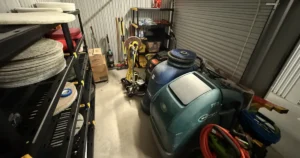
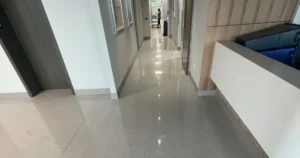
A facility with large hard-floor areas may need autoscrubber planning rather than mop time alone.
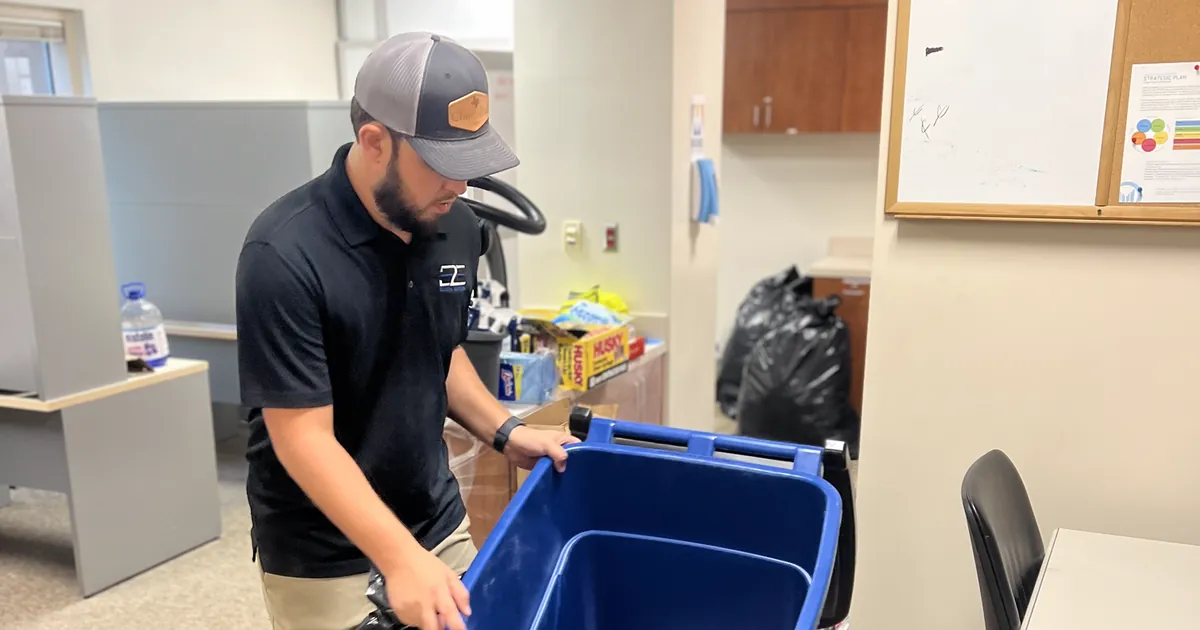
A restroom-heavy property may need cart setup and supply storage planned by location.
Buildings with safer-product preferences may require approved chemicals and enough dwell time for the product to work as labeled.
The EPA’s Safer Choice program helps purchasers identify products that meet EPA criteria for safer ingredients.
Facility managers who have product preferences, fragrance restrictions, or tenant expectations should share those details before the labor plan is finalized.
Equipment access matters too. If vacuums, carts, chemicals, and paper products must be transported from off site every night, the route takes longer. If storage is available and secure, the crew can start faster and work more consistently.
Compare bids by hours, assumptions, and outcomes
When two janitorial bids are far apart, the difference is often hidden in the assumptions. One provider may have included restroom detail every visit, periodic floor work, supervision, and travel time. Another may have counted only visible nightly tasks.
Facility managers should ask each bidder to explain:
- Estimated labor hours by location or location type
- Task frequencies for daily, weekly, monthly, and periodic work
- Production-rate assumptions for major areas
- What is excluded from the recurring scope
- How no-shows, callouts, and route coverage are handled
- How supplies, equipment, and consumables are handled
- How quality issues are reported and corrected
Each bidder can use its own template, as long as the price traces back to the work.
A cheaper bid may be fine if it found a smarter route or removed work the client doesn’t need. It becomes risky when the provider cut hours but left the scope the same.
What facility managers should send before asking for a bid
The better the input, the better the labor estimate. Before requesting proposals across several locations, collect a simple package for each site:
- Address and preferred service window
- Total square footage and usable cleaned area if available
- Floor plans or a basic room list
- Restroom count and fixture count
- Flooring types by area
- Current service frequency and known problem areas
- Access, alarm, parking, and trash-disposal instructions
- Supply responsibilities and storage availability
- Any security, tenant, healthcare, school, or financial-environment requirements
Photos help, but a walkthrough is stronger when the account is complex. The walkthrough lets the provider see traffic patterns, soil sources, flooring condition, storage limitations, and details that a spreadsheet misses.
FAQs about commercial cleaning labor hours
How do cleaning companies estimate janitorial labor hours?
Cleaning companies estimate labor hours by listing the tasks, assigning frequencies, applying production rates, and adjusting for site conditions. Restroom count, floor type, traffic, access, security steps, supply handling, and supervision all affect the final number.
Is square footage enough to price commercial cleaning?
Square footage is a starting point, not a complete pricing method. Two buildings with the same area can require different labor hours because of restrooms, customer traffic, floor surfaces, service windows, and expectations for detail work.
Why do janitorial bids for the same locations vary so much?
Bids vary because providers make different assumptions about scope, frequency, wages, supervision, supplies, equipment, periodic work, and risk. A low bid may exclude work that another provider included, so the line items matter more than the headline price.
Should multi-location businesses ask for hours by site?
Yes. Hours by site or site type help facility managers see whether the provider understood the work. A blended program can still make sense, but the estimate should be backed by location-level assumptions.
Get a janitorial labor plan that matches the building
A reliable cleaning program starts with honest labor planning. The right number of hours gives the crew enough time to protect presentation, hygiene, floors, restrooms, and customer-facing areas without hiding cost in vague assumptions.
E2E Cleaning Services provides White Glove commercial cleaning and janitorial support across Florida. If you manage one facility or a multi-location portfolio, we can review your scope, identify the work that belongs in the recurring schedule, and build a proposal around the building you actually operate.
Call (813) 819-0221 or request a free quote from E2E Cleaning Services to discuss your janitorial program.