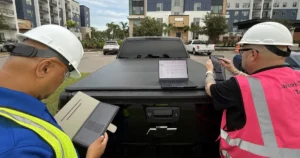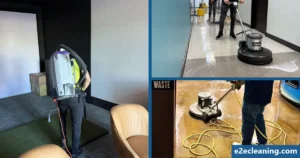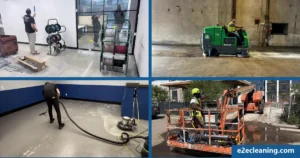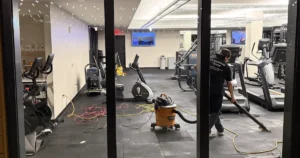
A real janitorial quality assurance program has a supervisor checking the building long before a client complains. It defines the cleaning scope, inspects the work against that scope, documents missed items, assigns corrections, and uses the pattern of those findings to improve staffing, training, supplies, and schedules.
Facility managers can usually tell the difference within the first month.
Weak quality control feels reactive. The same restroom issue returns. One location follows the checklist and another location drifts. The cleaning company apologizes, but the process does not change.
Strong quality assurance makes the work easier to manage because everyone can see what was expected, what was checked, what changed, and who owns the follow-up.
The cleaning scope has to be written before quality can be measured
Quality assurance (QA) starts with a written scope of work. A supervisor cannot inspect “good cleaning” in a useful way if the agreement never defined the rooms, tasks, frequencies, and standards.
A practical scope names the spaces first: lobby, offices, workstations, conference rooms, restrooms, breakrooms, stairs, elevators, corridors, exterior entries, storage rooms, and tenant areas.
Then it connects tasks and frequencies to each space. Trash pulled. Liners replaced. Counters wiped. Floors vacuumed or mopped. Fixtures cleaned. Touchpoints disinfected. Supplies restocked.
Each line is a task a crew can follow and a manager can inspect.
E2E often starts this conversation during a walkthrough, where the team sees the traffic patterns, floor types, and restroom count that shape the scope.
The inspection checklist has to fit the building
A checklist is useful when it matches the facility. Medical office suites, financial offices, warehouse offices, and multi-tenant commercial buildings should not all use the same inspection form.
And the best inspection checklists are built around risk.
Restrooms create immediate complaints. Entrances frame the first impression. Breakrooms show food residue, odor, and pest issues fast. High-touch points carry more hand contact than surrounding surfaces. Floors affect appearance, slip risk, and asset life.
A real janitorial quality assurance program, inspections focus on the areas most likely to affect occupants, customers, patients, tenants, and visitors. They also leave room for site notes.
In Tampa, an office may need extra attention on entry mats and lobby carpet during rainy weeks. Polished floors may need inspection notes tied to scuffs, dull traffic lanes, and mat placement.
Site-specific questions catch what a generic form misses:
- Was the restroom stocked when the crew left?
- Were touchpoints cleaned?
- Are floors drying properly?
- Is dust collecting above eye level?
- Did the crew report any access issue, leak, odor, damage, or blocked area?
Quality checks need a clear inspection cadence
Quality assurance fails when inspections happen only after a complaint. Facility managers should ask how often the cleaning company inspects the work, who performs the inspection, and what triggers an extra review.
New accounts usually need closer review during startup.
The first few weeks show whether the task list, supply plan, route, staffing, and access instructions match the building.
After that, the cadence can settle into routine inspections, periodic supervisor visits, and targeted checks after complaints or scope changes.
Multi-location clients need another layer.
If one site performs well and another site struggles, the manager should be able to compare inspection notes by location. That helps identify whether the issue is staffing, access, frequency, supplies, building traffic, or a scope gap.
Without location-level documentation, the buyer only hears a collection of complaints.
Ask the janitorial company to explain its inspection cadence in plain language. The answer should cover startup review, ongoing supervisor checks, issue escalation, and how findings get shared with the client.
Quality assurance documentation should show the problem and the fix
Documentation gives the client something to check besides a supervisor’s say-so, and it can stay short.
It can include inspection forms, supervisor notes, time-stamped photos, service tickets, supply reports, and follow-up logs.
The record should answer five questions:
- What area or task was checked?
- What was the expected standard?
- What was missed or flagged?
- Who corrected it?
- What change prevents the same issue from repeating?
The last question is the easiest one to check. If the log shows the same missed item week after week, and the only entry is “re-cleaned,” nothing changed.
A real fix changes the checklist, retrains the route, adjusts the supply closet process, or adds a supervisor spot check.
Changing the checklist, retraining the route, adjusting the supply closet process, or adding a supervisor spot check solves the pattern.
Documentation also shows which problems the crew couldn’t control, such as a locked room, a missing dispenser, a plumbing problem, low client-owned supplies, construction dust, or heavy event traffic.
The client can see what the crew missed and what needs fixing on the building side.
Safety and product use belong in the quality program
Cleaning quality includes appearance, safe product use, chemical labeling, PPE, dwell times, storage, and surface compatibility.
A shiny floor or fresh-smelling restroom is not enough if the wrong product damages finishes or creates a safety concern.
A janitorial QA program should make product discipline part of the inspections.
Supervisors should know whether crews are using the right product for the floor, the right disinfectant for high-touch areas, the right dilution, and the right storage practice.
Facility managers who want official references can start with EPA’s page on selected EPA-registered disinfectants and OSHA’s cleaning industry standards page, which lists general industry standards relevant to janitorial work, including personal protective equipment, ventilation, and hazardous materials.
Quality assurance should connect to staffing and training
Inspection results only matter if the cleaning company acts on them. When the same area keeps scoring low across several inspections, the cause often sits in crew training, route design, staffing levels, or supervisor coaching, and that is where the fix belongs.
Missed high-touch points usually mean the crew needs a clearer sequence and a visual list.
Inconsistent restroom stocking points to a supply check before the crew leaves.
Dust above door frames and vents usually means the scope needs periodic high dusting.
When mop streaks keep showing up on the floors, the cause is usually the dilution, dirty mop heads, or mop changes that aren’t frequent enough.
The building may also need a periodic commercial floor cleaning plan on top of the daily mopping.
Training should reflect the type of facility. Offices, medical suites, schools, gyms, and retail spaces all create different demands. The crew needs to know the details that matter in that building.
Clients should know how issues are reported and closed
Facility managers should not have to chase the same issue through text messages, emails, and hallway comments.
A quality program should define ownership: who receives the issue, who checks it, who tells the crew, who confirms the correction, and who updates the client.
If the issue affects multiple locations, someone must decide whether the fix applies to one site or the whole portfolio.
A quick apology helps, but the client trusts the program more when the correction is documented and the cause is fixed everywhere it could repeat.
How E2E walks a facility to check quality
E2E Cleaning uses the walkthrough to connect the scope, building conditions, and client expectations before a janitorial program starts.
The team looks for details that tend to create quality issues later:
- Restroom traffic, fixture count, dispenser condition, and restocking expectations
- Entry points, matting, lobby floors, and weather-related tracking
- Floor types, finish condition, carpet traffic lanes, and periodic care needs
- High-touch surfaces, shared equipment, and areas that need disinfecting after cleaning
- Access instructions, alarm codes, locked rooms, tenant restrictions, and after-hours limits
- Supply storage, chemical storage, SDS access, and product preferences
Those notes help build a cleaning plan that can be inspected. They also help E2E decide when recurring janitorial services should be supported by periodic commercial deep cleaning, floor care, carpet cleaning, or special project work.
Questions to ask a janitorial company about QA
Before you sign a cleaning agreement, ask the provider these questions:
- Will we receive a written scope by area, task, and frequency?
- Who performs quality inspections?
- How often are inspections completed during startup and after the account stabilizes?
- What does the inspection checklist include for our facility type?
- How are missed items documented?
- How do supervisors confirm corrections?
- How do repeated issues affect training, staffing, or the cleaning route?
- How will multi-location issues be tracked across sites?
- What safety, chemical, and product-use checks are part of the program?
- Who is our contact when a quality issue needs attention?
The answers should be specific enough to manage the account. If the provider says “we check our work” but cannot explain the process, the quality program may be little more than a sales phrase.
FAQ about janitorial quality assurance
What is janitorial quality assurance?
Janitorial quality assurance is the management process that checks whether cleaning work matches the agreed scope. It usually includes written standards, inspections, documentation, corrective action, supervisor review, and communication with the client when issues repeat or the scope needs adjustment.
How often should commercial cleaning be inspected?
New accounts often need closer review during startup, while stable accounts may use routine supervisor inspections plus targeted checks after complaints, tenant changes, events, construction work, or scope changes. The right frequency depends on the facility, service schedule, and risk level.
What should a cleaning inspection checklist include?
A cleaning inspection checklist should include the spaces, tasks, standards, and frequencies from the scope of work. It should cover restrooms, floors, trash, high-touch points, dusting, entrances, breakrooms, supplies, safety items, and any site-specific details that affect the client experience.
How does QA help multi-location businesses?
Quality assurance gives multi-location businesses a way to compare service across sites. Inspection notes can show whether a problem is limited to one building or points to a larger training, staffing, supply, or scope issue across the portfolio.
Build quality checks into the cleaning program from day one
A clean building should not depend on luck, the strongest crew member, or the client noticing every miss. It should come from a written scope, trained crews, supervisor review, documented corrections, and communication that keeps small problems from becoming normal.
E2E Cleaning Services helps Florida businesses build janitorial programs around the building, the schedule, and the standard the client expects.
If you manage an office, commercial property, medical office, school, retail location, or multi-location portfolio, E2E can walk the space and build a cleaning plan with quality checks in place before service starts.
Request a free commercial cleaning quote or call (813) 819-0221 to talk with E2E Cleaning Services about recurring janitorial services, commercial cleaning, and office cleaning across Tampa, Orlando, and the wider Florida market.