A commercial cleaning documentation checklist should show what gets cleaned, how often it happens, which areas need logs, which products are used, and who gets notified when something is missed.
For Florida facility managers, that documentation keeps a cleaning contract from turning into a vague promise.
Most cleaning complaints start small: a restroom runs out of paper, a spill sits too long, a lobby floor looks rough after rain.
The fix is a scope that gives the building, the cleaning team, and the decision-maker the same reference point.
Start with a task-and-frequency scope
The scope should separate daily, weekly, monthly, and periodic work.
If everything sits under “general cleaning,” nobody has a clean way to judge whether the work was done.
A strong janitorial scope should document:
- Areas included in service, such as offices, restrooms, lobbies, break rooms, hallways, elevators, conference rooms, and shared tenant spaces.
- Areas excluded from service, especially restricted rooms, storage areas, medical spaces, kitchens, or production areas.
- Daily tasks, including trash removal, restroom cleaning, high-touch cleaning, floor spot cleaning, entryway checks, and visible surface cleaning.
- Weekly and periodic tasks, including deeper dusting, glass touch-ups, floor work, carpet cleaning, pressure washing, high dusting, or post-event cleaning.
A 20,000-square-foot office with light foot traffic is a different job from one of the same size with shared restrooms and daily conference-room turnover.
Write the scope from that operating pattern first, then price the janitorial services contract from it.
Document restrooms separately
Restrooms deserve their own line in the scope because they create the fastest complaints.
A restroom can be clean at opening and still need attention after a morning rush, lunch traffic, or a busy tenant meeting.
A restroom cleaning log should include:
- Fixture count and cleaning frequency
- Supply ownership and trash removal
- Floor checks, odor concerns, and touchpoint
- Escalation steps for leaks, broken dispensers, or repeated issues
OSHA’s sanitation standard says a workplace must be kept clean as far as the work allows, and waste removed as often as necessary to keep things sanitary. The standard gives no number of visits, so a restroom with a morning rush and a lunch crowd needs a different schedule than one used a few times a day.
Tampa buildings with steady public traffic can run this log alongside commercial restroom cleaning on a set schedule.
Keep day porter notes during business hours
Night cleaning covers the building when it is mostly empty. Day porter service covers the building while people are using it.
If your facility uses a day porter, the documentation should show what gets checked during daytime rounds.
That may include entrances, lobbies, restrooms, elevators, food-service areas, trash points, conference areas, and wet-weather entry zones.
The notes should answer practical questions:
- What was found
- Where was it found
- Was it handled during coverage
- And does it need a maintenance ticket, supply order, or manager follow-up?
Florida rain and humidity can change the condition of an entryway fast.
A simple day porter log gives the facility manager proof of what happened during the day, separate from what the building looked like after hours.
For buildings that need daytime coverage, add day porter service to the cleaning documentation plan.
Separate routine floor care from restoration work
Floors are one of the easiest places for a scope to get blurry.
Daily mopping is not the same as machine scrubbing. Burnishing is not the same as stripping and waxing.
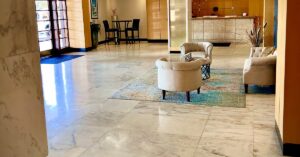
Marble, terrazzo, concrete, VCT, carpet, and tile all need different methods.
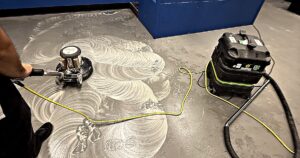
Your cleaning documentation should separate daily floor cleaning, entry mat checks, wet-weather response, periodic machine cleaning, strip and wax schedules, carpet cleaning, and specialty floor restoration.
OSHA’s walking-working surfaces standard says floors and passageways should be kept clean, orderly, sanitary, and, where feasible, dry. It also says walking-working surfaces should be inspected and maintained in safe condition.
Facility managers do not need to turn a cleaning scope into a legal document, but the scope should make floor responsibility clear.
Record product and disinfectant information
Cleaning, sanitizing, and disinfecting are different jobs.
CDC guidance for community facilities says cleaning regularly is enough in most situations. Disinfection is for areas where someone has obviously been ill, and for certain outbreaks, when local health authorities may recommend specific procedures.
When disinfectants are part of the scope, the cleaning file should include:
- Product name
- Surface type
- EPA registration number, when applicable
- Label directions
- Dwell (contact) time
- Safety Data Sheet access
- Any client restrictions on fragrance, chemicals, surfaces, or use in occupied spaces
EPA disinfectant resources explain that disinfectants are pesticides and that the EPA registration number is the reliable way to identify a product, and if a product’s label has no directions for a certain pathogen, EPA has not reviewed it for that use.
Use photos, inspection notes, and escalation paths
Photo documentation can settle a dispute about what the work looked like. Use photos for before-and-after proof, recurring problem areas, floor damage, stains, leaks, trash overflow, supply issues, and post-event work.
Inspection notes should name the issue, the location, the action taken, and whether follow-up is needed. If the same issue repeats, the scope may need to change.
That is better than blaming the crew for a building condition the original contract never priced.
A cleaning scope should also say who gets contacted when something is missed or when a problem falls outside normal cleaning. Worth documenting:
- Main site contact
- Backup contact
- Cleaning supervisor
- Response path for missed work
- Photo and report expectations
- How scope changes get approved
What to ask during an E2E walkthrough
Before your next cleaning quote, ask:
- Which areas are included?
- Which tasks are daily, and which are periodic?
- How are restrooms checked?
- Who supplies consumables?
- What products are used on high-touch surfaces?
- How are urgent issues reported?
- What floor care counts as restoration?
- Who reviews the work after the first few visits?
E2E Cleaning Services is based in Tampa and serves commercial facilities in Tampa Bay and Central Florida.
If you’re comparing quotes, or your current scope leaves too much open, request a walkthrough and a free quote. Request a walkthrough and a free quote. Call (813) 819-0221 or request a cleaning quote.
FAQs
What should be in a commercial cleaning scope of work?
A commercial cleaning scope should list the areas included, tasks performed, service frequency, excluded areas, product requirements, restroom and floor expectations, escalation contacts, and special services such as day porter coverage, floor care, high dusting, or pressure washing.
Do Florida businesses need cleaning logs?
Cleaning log requirements depend on the facility type, industry, and internal policy. Even when a log is not legally required, it can help facility managers track restrooms, high-touch areas, day porter checks, inspections, and recurring complaints.
What is the difference between cleaning, sanitizing, and disinfecting?
CDC explains cleaning as removing dirt and many germs from surfaces. Sanitizing reduces remaining germs after cleaning. Disinfecting kills certain germs that remain after cleaning when the product is used according to its label.
Should restroom cleaning be logged separately?
Yes, for many commercial buildings. Restrooms are high-complaint areas and often need separate notes for fixture count, supply restocking, trash removal, floor checks, odor concerns, and maintenance issues.
How often should a facility review its janitorial scope?
Review the scope when tenant traffic changes, complaints increase, restroom or floor issues repeat, a new manager takes over, the building adds events, or a contract renews. A short review can prevent months of mismatched expectations.